
Context note: This article reflects publicly available market and valuation information available as of September 2026. The latest KSH housing-market release available at the time of writing covers the first quarter of 2026, while the latest MNB House Price Index covers the second quarter of 2026.
Budapest property value is often discussed through a single number: price per square metre.
The measure is useful. It allows properties of different sizes to be compared, helps identify broad market levels and provides a convenient way to follow changes over time.
It is also easy to misuse.
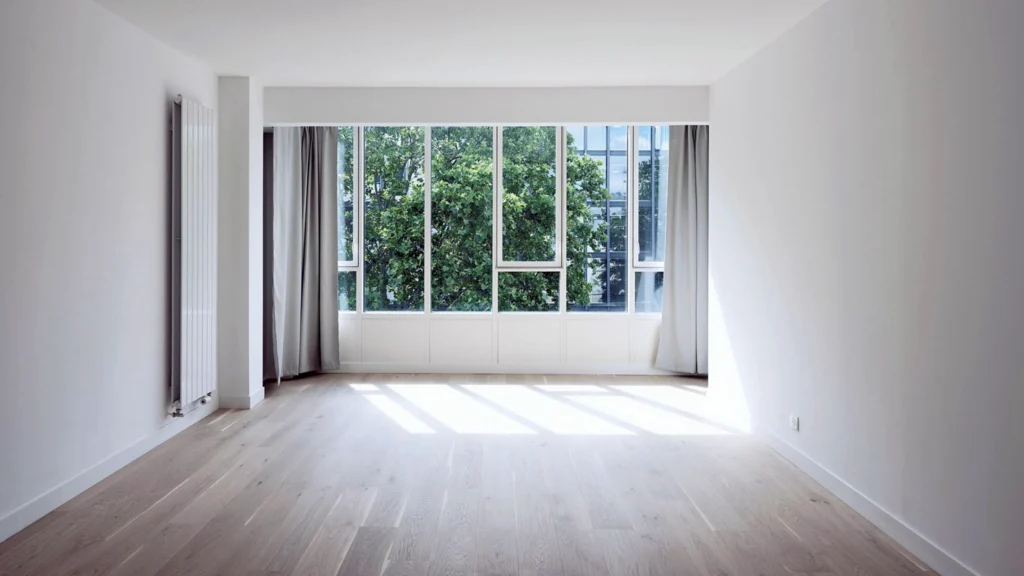
Two apartments of similar size in the same district can have materially different values. One may occupy a bright upper floor in a well-maintained historic building with balanced proportions and an open outlook. Another may face a narrow courtyard, require substantial technical work and sit in a building with unresolved maintenance issues.
Their floor area may be almost identical.
Their market position may not be.
This distinction becomes particularly important in the upper residential market, where scarce qualities can carry significant value and where simple averages become less representative.
Price per square metre is therefore a starting point for understanding a property, not a conclusion about what it is worth.
What the 2026 Market Data Actually Tells Us
Market statistics remain essential because they establish context.
KSH transaction data for the first quarter of 2026 placed the average price of a used Budapest home at approximately HUF 1.2 million per square metre. Within that overall figure, non-panel condominium apartments averaged approximately HUF 1.3 million per square metre, panel apartments approximately HUF 1.2 million and houses approximately HUF 0.9 million.
Even these broad categories moved differently.
KSH recorded different annual price changes across Budapest’s district groups, demonstrating that the capital was not behaving as a single uniform residential market.
The subsequent MNB House Price Index added another important signal.
According to the MNB, Budapest house prices increased by 1.9% during the first quarter of 2026 and then declined by 0.6% during the second quarter. The annual rate of price growth in the capital consequently slowed from 15.9% in the first quarter to 8.3% in the second.
These figures are useful indicators of direction.
They do not tell us what a particular apartment in a particular building on a particular street is worth.
That requires a different level of analysis.
Price per Square Metre Is a Unit of Comparison, Not a Valuation
A price-per-square-metre figure converts the value of a property into a common unit.
That makes comparison easier, but it does not remove the need to understand what is being compared.
A transaction at HUF 2 million per square metre does not prove that every nearby apartment is worth HUF 2 million per square metre.
The figure becomes meaningful only after examining the characteristics behind it: location, floor level, orientation, natural light, views, building condition, layout, renovation quality and the timing of the transaction.
This is especially important in the upper residential market, where genuinely comparable properties may be limited and where small differences in quality can have a material effect on value.
A credible assessment therefore relies on several pieces of evidence rather than a single nearby sale or listing.
The calculation is simple. The comparison is not.
Asking Price and Transaction Price Are Different Evidence
Online property portals are useful for understanding current supply and seller expectations.
But an asking price is not the same as a completed transaction price.
An asking price represents the amount at which an owner is willing to offer a property to the market. A transaction price reflects a figure at which a buyer and seller have actually reached agreement.
This distinction matters because several nearby listings at similar prices may appear to confirm a value while, in reality, they may only confirm that several owners have similar expectations.
Current listings can still provide valuable context. They show competing supply, positioning and the price levels buyers are being asked to consider.
But where reliable transaction evidence is available, completed sales generally provide stronger evidence of what the market has actually accepted.
Time on market, price reductions, condition and the circumstances of a transaction can also affect how much weight a comparable should receive.
A listing tells us what a seller hopes to achieve. A transaction tells us what the market has accepted.
Micro-Location Can Matter More Than the District Average
A Budapest district is too large to function as a complete valuation category.
Even within a prestigious central district, value can change between neighbouring streets and sometimes between different sections of the same street.
Relevant differences may include traffic, noise, pedestrian activity, architectural surroundings, proximity to the Danube or parks, public transport, restaurants, tourism intensity and the quality of the immediate streetscape.
The position of the building within the urban fabric also matters.
An apartment facing a protected square, a wide avenue or an open riverfront may provide a residential experience that cannot be replicated a few streets away.
This is why a district-level average should be treated as market context rather than direct evidence for an individual home.
In prime residential property, scarcity frequently begins at the micro-location level.
The Apartment’s Position Within the Building Matters
Two apartments inside the same condominium may justify different prices.
Floor level is an obvious example.
A higher-floor apartment may receive more natural light, experience less street-level intrusion and offer a more open outlook. Yet this advantage may be reduced if the building has no reliable lift.
Orientation matters as well.
Street-facing, courtyard-facing and corner positions can produce very different combinations of light, privacy, noise and views.
The location of the apartment relative to the lift, staircase, neighbouring units, commercial premises, mechanical equipment and internal courtyard can also influence everyday comfort.
Even before considering renovation, the physical position of the apartment creates qualities that may be difficult or impossible to alter later.
Within the same building, position can materially change both residential quality and market value.
Natural Light, Orientation and Views Are Scarce Attributes
Interior finishes can be changed.
Natural light is much more difficult to create where the building, orientation or surrounding urban fabric limits it.
Window size, floor level, orientation, neighbouring buildings, courtyard width and the depth of the floor plan all influence how daylight enters an apartment.
Views matter in a similar way.
An open urban outlook, a protected panorama or a view towards the Danube, historic landmarks or a well-proportioned streetscape can create a level of scarcity that is difficult to reproduce elsewhere.
By contrast, even an expensive interior cannot fully compensate for permanently poor daylight or a severely restricted outlook.
These qualities influence both everyday residential experience and future marketability.
This is why natural light, orientation and views should be considered separately from decorative quality when assessing a property’s value.
Some of the most valuable characteristics of a home are precisely those that cannot be added later.
Floor Area and Usable Residential Quality Are Not the Same Thing
Two apartments may both measure 120 square metres and still provide very different amounts of genuinely useful space.
One may have balanced rooms, efficient circulation, good storage and a clear separation between living and private areas.
Another may devote a large proportion of its area to corridors, oversized entrance halls, internal rooms or spaces that are difficult to furnish.
Ceiling height and room proportions can also change the perception and usability of a property without changing its registered floor area.
A buyer therefore does not experience square metres as an abstract quantity.
The buyer experiences rooms, circulation, storage, light and relationships between spaces.
A well-designed smaller apartment can sometimes function more effectively than a larger but poorly organised one.
Floor area measures quantity. It does not automatically measure residential quality.
The Building Is Part of the Property
An apartment is not financially or physically independent from its condominium.
The condition of the roof, facade, staircase, lift, courtyard, common mechanical systems and structural elements can influence both future expenditure and marketability.
Management quality matters as well.
A well-maintained building with sensible long-term planning may provide a very different ownership environment from a condominium facing deferred maintenance, inadequate reserves or repeated disputes.
The contrast becomes especially important where a highly renovated apartment sits inside a materially weaker building.
The interior may be private property.
Many of the risks surrounding it are shared.
For this reason, the building should form part of the value assessment rather than being treated as background scenery.
A strong apartment inside a weak building does not exist in isolation from the risks around it.
Renovation Cost Does Not Equal Market Value
Owners naturally remember what they spent on a property.
Purchase price, architectural fees, construction, bespoke furniture, stone, lighting, joinery and mechanical systems can represent substantial expenditure.
The market does not reimburse these costs automatically.
Some expenditure simply corrects deficiencies. Replacing unsafe wiring, outdated plumbing or failed mechanical systems may be essential, but these works may only bring the property to an acceptable standard rather than create an equivalent premium.
Other expenditure may be highly personal.
A specialist kitchen, imported surface, custom furniture or complex home-automation system can be expensive without appealing equally to every buyer.
What matters is not the invoice value of the work, but the extent to which the improvement creates durable, useful and desirable residential quality.
The market rewards value that buyers recognise — not renovation cost line by line.
Terraces, Balconies, Parking and Storage Need Separate Judgement
Not every square metre performs the same function.
A large terrace with an exceptional view can materially influence buyer demand, but treating its entire area mechanically at the same rate as an internal living room may create a misleading result.
The same principle applies to balconies, gardens, storage rooms and parking spaces.
Their contribution depends on usability, scarcity and local demand.
A secure parking space can have substantial value where parking supply is constrained and much less relevance where buyers rarely use cars.
A storage room can be highly practical for a family but may have limited influence on another buyer segment.
These elements should therefore be analysed as attributes of the whole property rather than simply added to the internal floor area without adjustment.
Ancillary spaces and amenities add value according to how useful and scarce they are — not according to floor area alone.
Architectural Character Can Create Scarcity
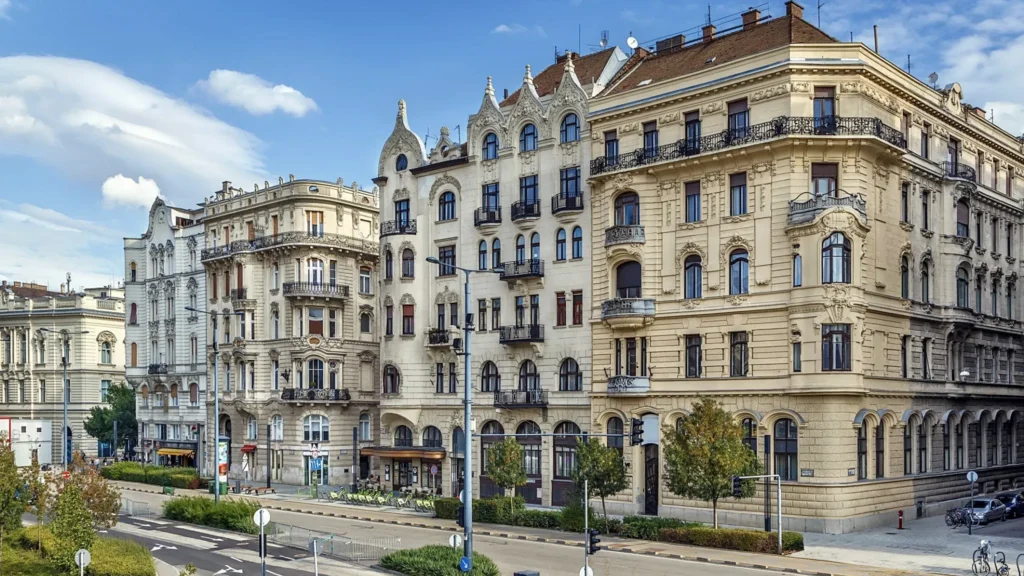
Budapest contains a substantial stock of historic residential buildings, but genuinely strong architectural qualities are not uniformly distributed within that stock.
High ceilings alone do not create architectural value.
More important is the relationship between proportions, windows, room sequences, original detailing, facade quality and the building’s overall composition.
Where original architectural character has survived and can coexist with contemporary residential comfort, the property may possess qualities that are difficult to reproduce in new construction.
Scarcity matters because markets can place a premium on attributes that are limited in supply and difficult to recreate.
The relevant question is therefore not whether a property is old or new.
It is whether its architectural qualities create lasting residential appeal.
Architectural character becomes valuable when it is coherent, usable and genuinely difficult to replicate.
Legal and Documentary Reality Affect Value
A visually attractive property can still contain documentary uncertainty.
Floor plans may not reflect later alterations. Spaces may have been combined, divided or repurposed. Technical systems or structural interventions may have been changed without a clear documentary record.
These issues do not automatically mean that a property is unsuitable.
They do affect the level of investigation required.
A buyer considering a significant purchase should understand whether the physical property corresponds sufficiently with the legal and technical documentation and whether material alterations were completed under the requirements applicable to them.
Uncertainty can influence transaction timing, financing, future works and eventual resale.
For this reason, documentation is not simply an administrative concern.
It forms part of property risk.
Specific legal questions should be assessed by an appropriately qualified Hungarian lawyer, while technical matters may require the relevant professional specialist.
A property’s physical quality and its documentary reality should support each other.
Comparable Properties Must Actually Be Comparable
This is the central discipline in property assessment.
A comparable should not be selected merely because it has a similar floor area or appears on a map within the same district.
Relevant comparison factors may include micro-location, building type, floor level, lift access, orientation, natural light, views, layout, condition, terrace or balcony, parking, architectural quality, noise exposure and the timing of the transaction.
The stronger and more unusual the property, the more difficult this exercise can become.
A genuinely scarce apartment may have relatively few close comparables precisely because the qualities that make it valuable are uncommon.
In that situation, the answer is not to pretend that weaker evidence is identical.
It is to recognise the differences and assign each piece of evidence appropriate weight.
Several imperfect comparables, carefully analysed, can be more useful than one superficially similar property treated as definitive.
A comparable is useful only to the extent that it is genuinely comparable.
Liquidity Is Part of Value
An asking price can exist indefinitely.
Market value ultimately depends on interaction with buyers.
This makes liquidity relevant.
A property with broadly desirable characteristics may attract a larger pool of qualified purchasers and therefore provide more predictable resale prospects.
Another property may possess spectacular but highly specialised qualities and appeal to a much narrower audience.
Neither is automatically better.
But their market behaviour can be different.
When assessing value, it is therefore useful to consider not only what price might theoretically be achieved, but also how deep the likely buyer pool is and how sensitive demand may be to pricing.
This becomes particularly important in markets where headline price growth slows or transaction volumes change.
Value is influenced not only by what a property can achieve, but also by how readily the market may absorb it.
What a Credible Property Assessment Should Do
A credible property assessment should begin with the wider market and progressively narrow the evidence.
Citywide data provides context.
District and neighbourhood evidence improves relevance.
Comparable transactions and current competing supply provide more direct market information.
The characteristics of the individual building and apartment then determine how that evidence should be interpreted.
The result should therefore not be a mechanical multiplication:
floor area × average price per square metre
It should be a reasoned view based on several pieces of evidence and adjusted for the attributes that distinguish the property.
Where appropriate, different valuation approaches may also be relevant depending on whether the property is considered primarily as an owner-occupied residence, an income-producing investment or another type of asset.
A formal valuation required for financing, litigation, taxation or another regulated purpose should be undertaken by an appropriately qualified professional under the applicable standards.
A credible assessment combines market evidence with property-specific judgement.
What Budapest Property Value Really Depends On
Property markets need numbers.
Without transaction data, price indices and comparable evidence, value becomes subjective.
But numbers need interpretation.
In Budapest, a citywide average cannot fully describe the difference between a courtyard apartment and a panoramic upper-floor residence, between an architecturally coherent building and one facing significant deferred maintenance, or between a technically serious renovation and a visually impressive cosmetic refurbishment.
Market data establishes the range within which buyers and sellers operate.
The individual property explains where within that range a particular home belongs.
For buyers, this distinction helps avoid paying a premium for characteristics that are easily reproduced or primarily decorative.
For owners, it helps separate defensible property strengths from expectations based only on neighbourhood averages or renovation expenditure.
For both parties, the strongest pricing decisions are those in which market evidence and property-specific judgement are considered together.
The most useful question is therefore not simply “What is the average price per square metre?” but “What makes this particular property comparable — or not comparable — with the evidence around it?”
Sources and Further Reading
KSH — Housing Market Prices and House Price Index, Q1 2026
Official transaction-based statistics on Hungarian residential property prices, including Budapest price levels, property-type differences and district-group trends.
View the official KSH housing-market release
Magyar Nemzeti Bank — MNB House Price Index, Q2 2026
Official house-price indices showing quarterly and annual residential price movements in Budapest and other settlement types.
View the official MNB House Price Index
Magyar Nemzeti Bank — Housing Market Report, May 2026
Central-bank analysis of Hungarian housing-market prices, transactions, demand, investment activity and the changing supply environment.
View the official MNB Housing Market Report
RICS — Comparable Evidence in Real Estate Valuation
Professional guidance on identifying, analysing and weighting comparable evidence when assessing real-estate value.
View the RICS guidance on comparable evidence
Suggested Internal Reading
What Defines a High-Quality Budapest Apartment?
Beyond the Apartment: How to Assess a Budapest Condominium Before Buying
Renovated or Unrenovated: How to Assess the Real Value of a Budapest Property
Budapest’s Prime Residential Districts: Where Demand and Scarcity Intersect
Selling Property in Hungary: Key Steps for International Owners
The information in this article is provided for general informational purposes only and reflects publicly available information as of September 2026. It does not constitute a formal property valuation or appraisal, or legal, tax, financial, investment, technical or surveying advice. Market conditions and individual property circumstances may change. Buyers, owners and sellers should obtain appropriate professional advice and, where a formal valuation is required, instruct a suitably qualified valuer.
Related Insights