Budapest offers an unusually varied residential building stock, ranging from historic inner-city apartments and early twentieth-century villas to modern developments and carefully converted industrial buildings.
A high-quality Budapest apartment is not defined by a prestigious address, generous floor area or a visually impressive interior alone. Lasting residential value is usually created by the relationship between several factors: natural light, orientation, spatial proportions, ceiling height, building condition, floor level, privacy, noise exposure and the standard of renovation.
Understanding how these elements work together is essential when assessing a property for personal use, long-term ownership or future resale.
Natural Light as a Fundamental Quality
Natural light is one of the most important and difficult-to-alter characteristics of an apartment.
Large windows alone do not guarantee a bright interior. The amount and quality of daylight also depend on the apartment’s orientation, floor level, surrounding buildings, courtyard dimensions, window position and the depth of the rooms.
A street-facing apartment on an upper floor may receive excellent light even without direct sunlight throughout the day. By contrast, a lower-floor apartment in a narrow courtyard may remain comparatively dark despite having generous window openings.
Light should therefore be assessed in the property itself, preferably at different times of day. Particular attention should be paid to the principal living spaces, rather than only to entrance halls, kitchens or secondary rooms.
Orientation and Exposure
Orientation influences daylight, solar gain, seasonal comfort and the way an apartment feels during different parts of the day.
South- and west-facing rooms may benefit from stronger afternoon light but can also become warmer during the summer months. East-facing rooms often receive pleasant morning sun, while north-facing spaces may provide softer and more consistent light.
There is no universally superior orientation. The appropriate balance depends on the apartment’s layout, shading, glazing, ventilation and intended use.
A well-designed Budapest apartment may combine different exposures: quieter bedrooms facing an inner courtyard and brighter reception rooms overlooking the street, garden or cityscape. Dual-aspect or corner apartments can be particularly attractive because they often benefit from improved light, ventilation and visual depth.
Spatial Proportions and Layout Efficiency
The quality of an apartment is determined not only by its total floor area but by how effectively that area is organised.
Well-proportioned rooms, clear circulation and a logical relationship between private and shared spaces generally create greater residential value than an apartment with a larger but fragmented plan.
Important considerations include:
- whether the principal rooms have practical dimensions;
- how much floor area is lost to corridors and transitional spaces;
- whether bedrooms can be accessed without passing through reception rooms;
- whether bathrooms and service spaces are appropriately located;
- whether the kitchen relates naturally to the dining and living areas;
- whether the plan can accommodate contemporary use without compromising the original architecture.
Historic Budapest apartments were often designed around social and household patterns different from those of today. Some adapt exceptionally well to modern living, while others require substantial reorganisation. The potential for improvement should always be assessed alongside the technical and legal feasibility of altering the plan.
Ceiling Height and Interior Volume
Generous ceiling height is one of the defining qualities of many historic Budapest apartments.
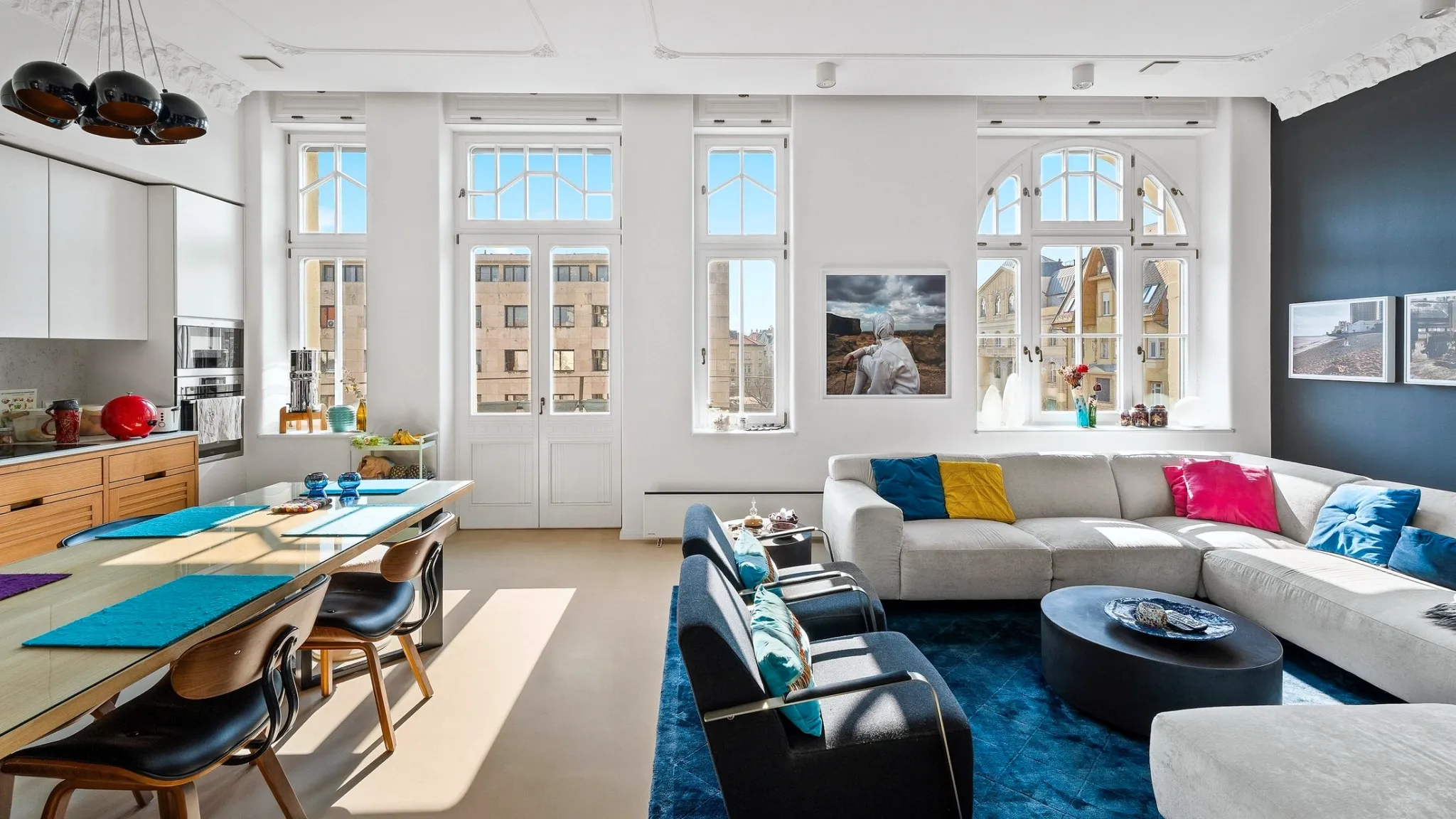
High ceilings can create elegance, improve the sense of space and allow tall windows to bring light deeper into the interior. They also support architectural details such as decorative cornices, double doors, panelling and ceiling ornamentation.
However, ceiling height should not be considered in isolation. A very tall but narrow or poorly lit room may feel less balanced than a slightly lower room with better proportions.
High internal volume may also affect heating, cooling and acoustics. The best interiors combine ceiling height with appropriate room width, window scale and furnishing possibilities.
Suspended ceilings should be examined carefully. They may conceal building services or improve lighting, but they can also cover original architectural features or reduce the spatial character that gives the apartment its value.
Street-Facing and Courtyard Rooms
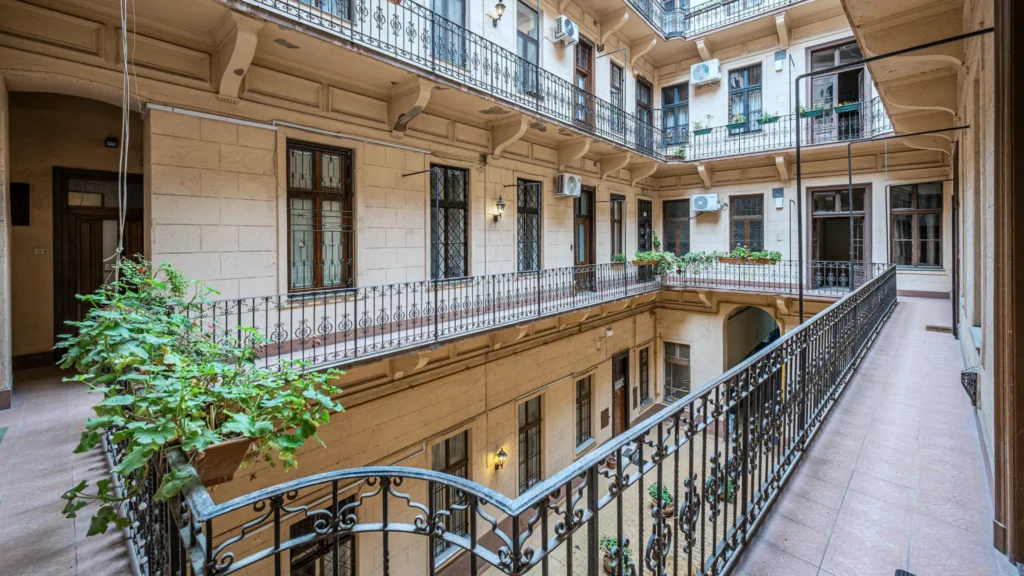
Many traditional Budapest apartment buildings are organised around an internal courtyard, producing a clear distinction between street-facing and courtyard-facing rooms.
Street-facing rooms often provide better natural light, broader views and a stronger connection with the city. They may also be exposed to traffic, public transport or nightlife.
Courtyard-facing rooms are frequently quieter and more private, although their daylight conditions vary significantly according to floor level, courtyard width and neighbouring elevations.
Neither position is automatically preferable. A successful apartment often uses both strategically: representative living spaces toward the street and bedrooms or service rooms toward the quieter courtyard.
When viewing a property, the courtyard itself should also be assessed. Its proportions, maintenance, planting, circulation and acoustic behaviour can have a substantial effect on the daily experience of the apartment.
Building Character and Common Areas
An apartment cannot be evaluated entirely separately from the building in which it is located.
The architectural character, structural condition and management of the building influence both residential quality and future marketability. Entrance halls, staircases, facades, roofs, courtyards and lifts form part of the overall ownership experience.
A beautifully renovated apartment in a neglected building may still face limitations. Deteriorated common areas, unresolved structural issues or weak condominium management can affect comfort, costs and resale prospects.
Conversely, a well-maintained historic building with coherent architecture and carefully preserved common areas can add considerable value, even where the apartment itself still requires renovation.
The assessment should therefore include not only the visible condition but also planned works, common-cost obligations, reserve funds and the building’s general maintenance culture.
Floor Level, Lift and Accessibility
Floor level influences daylight, views, privacy, street noise and accessibility.
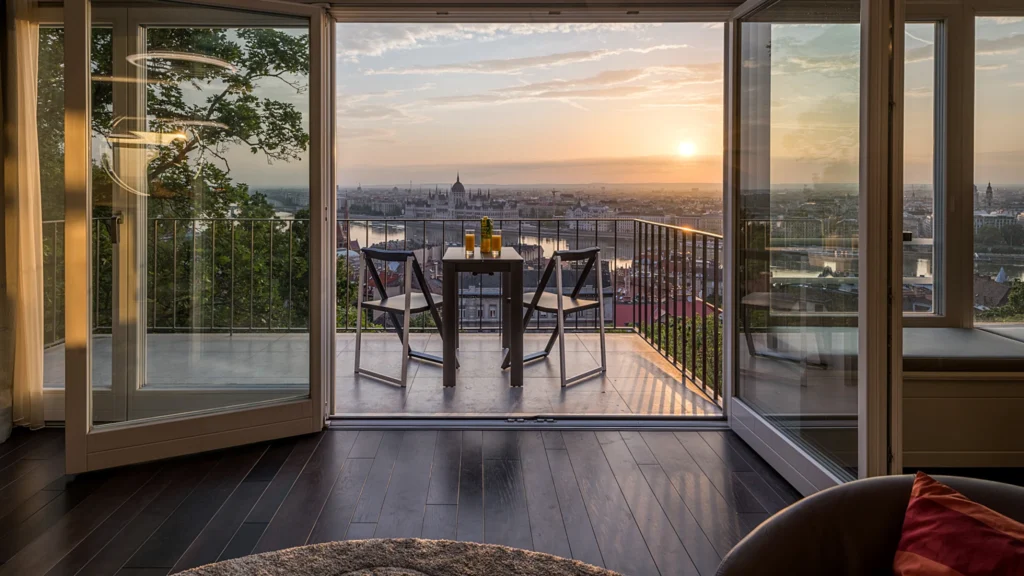
Upper-floor apartments frequently benefit from better light and a greater sense of separation from the street. They may also offer attractive roofline or city views. Lower floors can provide easier access and a closer relationship with gardens or courtyards, but may experience reduced privacy and daylight.
The presence and condition of a lift become increasingly important on higher floors. In historic buildings, lifts may be small, later additions or accessible only after several entrance steps.
A top-floor apartment requires particular attention. It may offer exceptional light and privacy, but the condition of the roof, summer heat exposure, insulation and any previous attic conversion should be reviewed carefully.
The ideal floor is therefore determined by the relationship between building design, outlook, access and the buyer’s intended use.
For buyers assessing accessibility, maintenance and year-round use from abroad, see Budapest as a Second-Home Destination: Lifestyle, Accessibility and Year-Round Use.
Noise, Privacy and Everyday Comfort
Noise conditions are not always apparent during a short property viewing.
Traffic, trams, restaurants, schools, neighbouring apartments, courtyard circulation and building services can all affect acoustic comfort. Window quality may reduce external noise, but it cannot resolve every source of disturbance.
Room placement is particularly important. Bedrooms facing a quiet courtyard may remain comfortable even where the reception rooms overlook an active boulevard. By contrast, poorly positioned mechanical equipment or an echoing internal courtyard can affect otherwise attractive rooms.
Privacy should also be considered. Direct sightlines from neighbouring windows, external corridors passing bedroom windows and close opposing facades may reduce the sense of seclusion.
A high-quality apartment should support comfortable everyday living, not merely create a strong first impression.
The Quality of Renovation
Renovation quality is one of the most frequently misunderstood aspects of residential property.
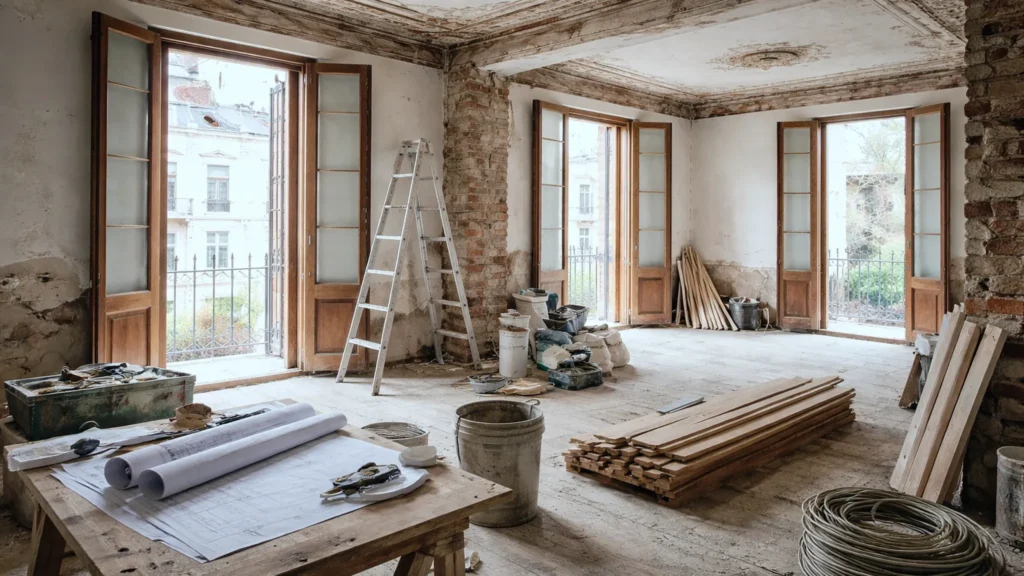
Expensive finishes do not necessarily indicate a technically sound or architecturally appropriate refurbishment. A high-quality renovation should address the underlying building systems as well as the visible interior.
The review should consider:
- electrical wiring and capacity;
- plumbing and drainage;
- heating and cooling systems;
- window condition and performance;
- waterproofing in bathrooms and wet areas;
- floor construction and sound insulation;
- wall preparation and surface quality;
- built-in furniture and joinery;
- the integration of lighting and mechanical systems;
- documentation for structural or layout changes.
Good renovation also respects the character of the property. In a historic apartment, original doors, parquet flooring, stonework and decorative elements may contribute more to long-term value than fashionable finishes with a limited visual lifespan.
The strongest projects combine technical reliability, architectural restraint and materials appropriate to the building.
For a closer comparison of refurbishment quality, technical condition and defensible long-term value, see Renovated or Unrenovated: How to Assess the Real Value of a Budapest Property.
Quality Is the Result of Balance
Few apartments perform perfectly in every respect.
A property may have exceptional natural light but limited privacy, elegant proportions but no lift, or a prestigious location with greater noise exposure. The purpose of a careful assessment is not to search for an abstract ideal but to understand which compromises are permanent and which can be improved.
Paint, furniture and decorative finishes can be changed relatively easily. Orientation, ceiling height, structural proportions, floor level and the relationship to neighbouring buildings generally cannot.
For this reason, the most valuable residential qualities are often those embedded in the architecture itself.
For a market-focused analysis of how architectural quality, scarcity and durable demand intersect, see Budapest’s Prime Residential Districts: Where Demand and Scarcity Intersect.
A Considered Property Assessment
A high-quality Budapest apartment is not defined by a single feature, postcode or design style.
Its appeal comes from the way architecture, light, space, building quality and everyday comfort work together. These qualities should be evaluated in relation to the buyer’s objectives, whether the property is intended as a principal residence, a second home or a long-term investment.
For a broader framework for matching property type, location and residential quality to the buyer’s objectives, see What to Buy in Budapest: Matching Property Type, Location and Buyer Objectives.
A considered acquisition process looks beyond presentation and identifies the characteristics that will continue to support the property’s usability, distinctiveness and market relevance over time.
For the wider legal, practical and transactional framework surrounding an acquisition, see Buying Property in Hungary: Key Steps for International Buyers.
Sources and Further Reading
Municipality of Budapest
Budapest Cityscape Design Manual.
National Legislation Database
Government Decree No. 280/2024 (IX. 30.) on National Urban Planning and Building Requirements.
World Health Organization Regional Office for Europe
Environmental Noise Guidelines for the European Region.
Royal Institution of Chartered Surveyors
Home Survey Standard, First Edition.
This article provides general property and architectural information only and does not constitute legal, tax, financial, valuation, technical or other professional advice. The condition and suitability of an individual property should be confirmed with appropriately qualified Hungarian advisers.
Related Insights