
Market context: This guide to what to buy in Budapest reflects residential market conditions and buyer considerations as of July 2026. Market conditions, financing costs, taxation, regulation and property availability may change, and every acquisition should therefore be assessed using current information and property-specific due diligence.
After the particularly strong price increases recorded during 2025, the Budapest market showed signs of moderation during the first half of 2026. According to the MNB House Price Index, Budapest residential prices increased by 1.9 per cent in the first quarter of 2026 and declined by 0.6 per cent in the second quarter, while annual nominal growth slowed from 15.9 per cent to 8.3 per cent. The Hungarian Central Statistical Office reported an average second-hand residential price of approximately HUF 1.2 million per square metre in Budapest in the fourth quarter of 2025, although differences between districts, building types and individual properties remained substantial.
In practical terms, this means that buyers should be cautious about treating Budapest as a single, uniform market. The quality of the building, the precise micro-location, the efficiency of the floor plan, the condition of the property and its suitability for the buyer’s intended use may be more important than general citywide price movements.
The central question is therefore not simply:
Which Budapest district should I buy in?
A more useful question is:
Which combination of property type, location and ownership objective is most appropriate for me?
Begin With the Buyer’s Objective
A property should not be selected before the buyer’s intended use has been clearly defined.
Two apartments of similar size and price may offer very different value depending on whether the objective is:
- a permanent home;
- a second residence;
- accommodation for children or family members;
- long-term rental income;
- capital preservation;
- future resale;
- renovation and value enhancement;
- or a combination of personal use and investment.
The same property may be highly suitable for one buyer and inappropriate for another. A centrally located apartment requiring regular maintenance may work well as a permanent urban residence but may be inconvenient as an occasional second home. A large villa may provide privacy and space but may be less suitable for a buyer seeking simple management, rental liquidity or frequent international travel.
The acquisition strategy should therefore begin with the intended use, holding period and expected level of involvement.
Buying a Permanent Home
For a primary residence, everyday usability should normally take priority over short-term marketability.
Important considerations include:
- travel time to work, schools and regular destinations;
- access to public transport;
- natural light and orientation;
- noise levels;
- floor-plan efficiency;
- storage;
- parking;
- outdoor space;
- lift access;
- building condition;
- and the quality of the immediate neighbourhood.
A permanent home must function well throughout the year. A prestigious address alone does not compensate for an inefficient layout, poor light, excessive street noise or a building facing substantial future repair costs.
For many buyers, an established condominium apartment in Buda or central Pest provides an effective balance between urban accessibility and long-term usability. Families requiring more space, privacy and green surroundings may prefer the Buda Hills, while buyers prioritising cultural life, walkability and proximity to the city centre may favour historic Pest.
The correct choice depends less on the district’s general reputation than on how the property supports the buyer’s actual daily routine.
Buying a Second Home
A second home usually requires a different decision framework.
Convenience, accessibility and ease of management may be more important than maximum size. Buyers using a property only periodically should consider:
- straightforward airport and city access;
- secure entry and building management;
- lift availability;
- low maintenance requirements;
- predictable common costs;
- efficient heating and cooling;
- the ability to leave the property unoccupied safely;
- and proximity to services, restaurants and cultural facilities.
A well-positioned apartment in central Pest, along the Danube or in an accessible part of Buda may therefore be more practical than a larger but operationally demanding property.
A second home should also remain attractive under changing circumstances. A buyer who initially intends to use the property privately may later decide to accommodate family members, rent it on a long-term basis or sell it. Properties with broadly desirable characteristics usually provide greater flexibility.
For a broader assessment of accessibility, management and year-round use, see Budapest as a Second-Home Destination: Lifestyle, Accessibility and Year-Round Use.
Buying for Long-Term Rental Income
A rental acquisition should be evaluated primarily as an operating asset rather than as a personal lifestyle purchase.
The most visually impressive property is not necessarily the strongest rental investment. Long-term tenants often value:
- efficient layouts;
- good public transport;
- reliable building services;
- appropriate room sizes;
- modern kitchens and bathrooms;
- manageable utility costs;
- storage;
- and proximity to employment, universities or international schools.
The expected tenant profile should be identified before the property is selected.
A compact one- or two-bedroom apartment in a well-connected location may offer a broader tenant market than a highly individual luxury property. Conversely, a larger, professionally presented apartment or villa may be suitable for diplomatic, executive or international family tenants, provided that the location, parking, security and operational standards meet their expectations.
The acquisition price should not be justified solely by an assumed future rent. Common costs, maintenance, vacancy, furnishing, management, taxation and periodic refurbishment must also be considered.
The MNB noted in its May 2026 Housing Market Report that investment buyers had become more cautious in the context of rising prices, lower rental yields and increased estimated overvaluation. This reinforces the importance of property-specific income analysis rather than relying on general expectations of appreciation.
For broader context on recent pricing, supply and demand conditions, see Budapest Prime Residential Market: What the Latest Data Suggests.
Buying for Capital Preservation
Some buyers are less concerned with immediate rental income and more interested in holding a property that may retain its relevance over a long period.
For this objective, scarcity and enduring desirability are particularly important.
Properties with stronger long-term defensive qualities may include:
- apartments in architecturally significant buildings;
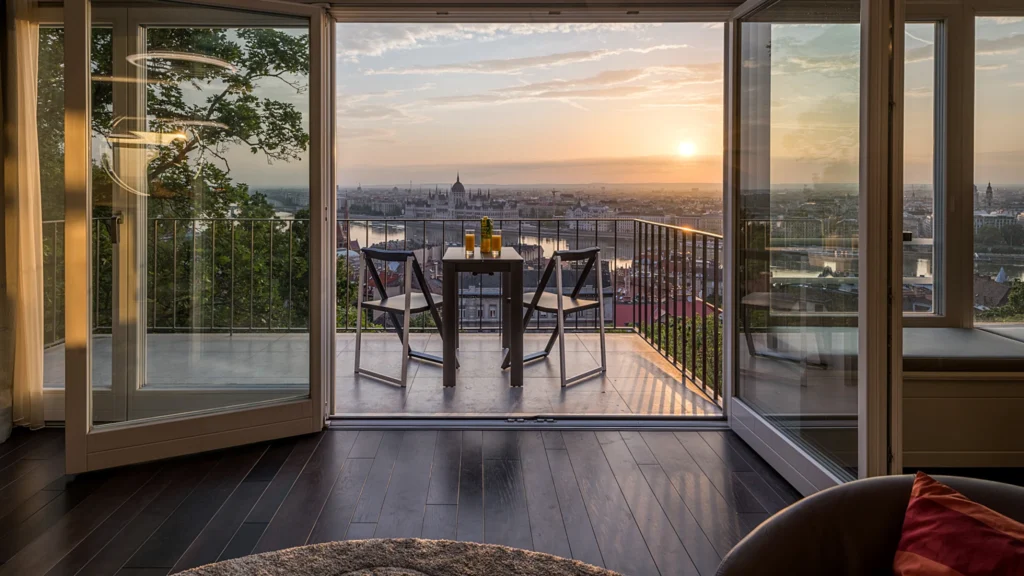
- properties with permanent views;
- well-proportioned homes in established residential areas;
- high-quality riverside apartments;
- villas in protected or low-density neighbourhoods;
- and properties that would be difficult to reproduce under present planning conditions.
Scarcity alone, however, is not enough. A rare property may still suffer from poor access, impractical maintenance requirements, legal complications or limited resale demand.
Capital preservation generally favours properties that combine distinctive characteristics with broad usability. The strongest asset is often not the most unusual property, but the one that remains desirable to several different categories of future buyer.
For a closer examination of scarcity and durable demand across Budapest’s prime micro-markets, see Budapest’s Prime Residential Districts: Where Demand and Scarcity Intersect.
Buying to Renovate or Reposition
A renovation opportunity may provide greater control over design and specification, but it also introduces additional uncertainty.
A lower purchase price does not automatically mean better value. Buyers must consider:
- the realistic scope of works;
- structural and building-level constraints;
- protected architectural elements;
- mechanical and electrical replacement;
- window and façade restrictions;
- construction access;
- condominium approvals;
- professional fees;
- financing costs;
- and the time required before the property can be used or rented.
The best renovation opportunities are usually properties where the existing deficiencies can be corrected without compromising the underlying strengths of the asset.
Strong underlying characteristics may include:
- an efficient structural layout;
- good ceiling height;
- adequate natural light;
- a desirable orientation;
- an attractive building;
- a lift or the realistic possibility of installing one;
- and a location with established demand.
A poorly located or fundamentally compromised property does not become a high-quality asset merely because it has been expensively renovated.
For a more detailed assessment of this question, see:
Renovated or Unrenovated: How to Assess the Real Value of a Budapest Property
Matching Property Type to the Objective
Budapest offers several distinct residential property types, each of which serves different buyer priorities.
Classic Condominium Apartment
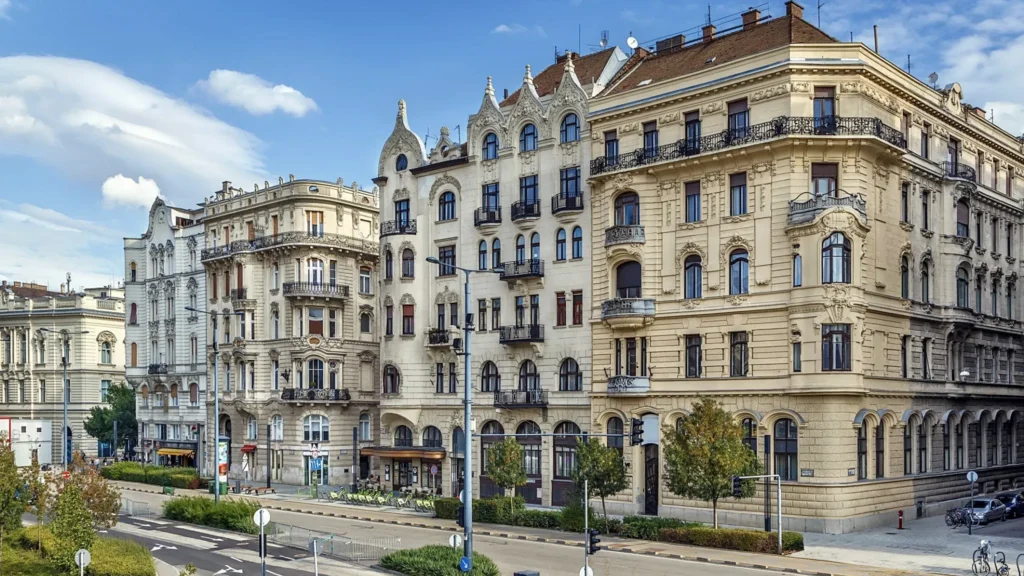
Historic condominium apartments are central to Budapest’s architectural identity.
They may offer:
- generous ceiling heights;
- large windows;
- decorative details;
- substantial room proportions;
- and desirable central locations.
However, the quality of the individual apartment cannot be separated from the condition and management of the building. Buyers should examine the roof, façade, lift, common areas, utilities, reserve funds and planned works.
These properties may suit buyers seeking architectural character, central living and long-term appeal, but they require careful technical and legal review.
Modern Apartment or Penthouse
Modern developments may provide:
- lifts;
- underground parking;
- terraces;
- energy-efficient systems;
- predictable building services;
- and simpler maintenance.
They can be particularly suitable for international buyers, second-home owners and those prioritising convenience.
The principal risks include inefficient layouts, excessive common costs, limited storage, compromised privacy and price premiums that may not be fully supported by location or construction quality.
A penthouse should be assessed not merely by floor level or terrace size, but by orientation, privacy, wind exposure, overheating risk, waterproofing and the long-term usability of the outdoor areas.
House or Villa
Houses and villas generally offer more space, privacy and outdoor areas, but also involve greater operational responsibility.
They may be appropriate for:
- families;
- diplomatic or executive use;
- buyers requiring privacy;
- multigenerational living;
- or long-term ownership.
Key issues include access, parking, land characteristics, structural condition, drainage, retaining walls, energy use, security and garden maintenance.
Location is especially important. A villa that appears geographically close to the centre may still involve difficult daily access because of traffic patterns, steep roads or limited public transport.
Whole Building or Redevelopment Property
A whole building may provide substantial strategic opportunity, but it is fundamentally different from buying an individual residence.
Such acquisitions require detailed consideration of:
- title structure;
- planning status;
- existing occupancies;
- technical condition;
- heritage restrictions;
- development potential;
- construction logistics;
- financing;
- taxation;
- and exit strategy.
These properties are generally suitable only for experienced buyers or investors supported by a coordinated legal, technical and commercial advisory team.
Matching Location to Use
The correct location cannot be determined independently from the intended use.
Historic Pest
Historic Pest may appeal to buyers seeking:
- centrality;
- architecture;
- cultural access;
- walkability;
- and established rental demand.
The quality of individual streets and buildings can vary significantly. Noise, short-term visitor traffic, building management and the condition of common areas require particular attention.
Danube and Riverside Locations
Riverfront and near-river properties may offer views, prestige and enduring international recognition.
However, not every property described as “riverside” provides an unobstructed view or direct relationship with the Danube. Orientation, traffic, tram lines, floor level and future development should all be examined.
Permanent views and scarce positions can support long-term appeal, but the premium must remain proportionate to the property’s overall quality.
Buda Hills and Green Residential Areas
Buda’s hillside neighbourhoods may provide:
- greenery;
- privacy;
- lower density;
- larger homes;
- gardens;
- and panoramic views.
They are often suitable for families and long-term residential use.
The trade-offs may include greater dependence on cars, more complex building maintenance, higher energy use and reduced walkability. Accessibility should be tested during normal weekday conditions rather than assessed only from a map.
Transitional and Developing Areas
Neighbourhoods undergoing regeneration may offer newer housing stock and potentially lower entry prices than established prime locations.
These areas require careful analysis. Future infrastructure, surrounding development quality, construction activity, neighbourhood services and resale demand should be considered.
A lower price is only advantageous if the property remains suitable for the buyer’s objective and if the surrounding location is likely to support that use.
For a more detailed comparison of Budapest’s principal residential environments, see:
Choosing the Right Budapest District: Buda Hills, Historic Pest and Riverside Living
Liquidity and Future Resale
Even buyers planning to hold a property for many years should consider future liquidity.
Circumstances change. A permanent residence may become a rental property. A second home may need to be sold. An investment may no longer fit a broader portfolio.
Features that generally support wider future demand include:
- good natural light;
- efficient room proportions;
- lift access;
- manageable size;
- outdoor space;
- parking where relevant;
- sound building condition;
- recognised location;
- and a price appropriate to the property’s actual qualities.
Highly personalised finishes, unusual layouts and excessive size may narrow the future buyer pool, even where the property is visually impressive.
Liquidity does not mean selecting the most ordinary property. It means avoiding characteristics that unnecessarily restrict future use or appeal.
Building Quality Matters as Much as the Apartment
In Budapest, particularly within the historic condominium stock, the condition of the building can materially affect the value and usability of the individual apartment.
A renovated interior inside a poorly maintained building may still face:
- façade works;
- roof repairs;
- lift replacement;
- drainage problems;
- outdated common utilities;
- weak financial reserves;
- or disputes between owners.
Buyers should therefore review both the apartment and the condominium as a whole.
For a detailed discussion of spatial, architectural and technical quality, see:
What Defines a High-Quality Budapest Apartment?
Legal and Technical Due Diligence
Once a suitable property has been identified, the decision must be tested through formal due diligence.
This may include:
- verification of ownership and title;
- review of registered rights and encumbrances;
- examination of condominium documentation;
- confirmation of permitted use;
- review of planning or heritage restrictions;
- verification of floor area;
- technical inspection;
- assessment of utilities and building systems;
- and review of any planned common works.
International buyers may also need advice regarding acquisition permissions, taxation, ownership structures, financing and estate planning.
These matters are discussed in more detail in:
Buying Property in Hungary: Key Steps for International Buyers
A Practical Decision Framework
Before making an offer, the buyer should be able to answer five questions clearly.
1. What is the primary objective?
Is the property intended for living, occasional use, rental income, capital preservation or value enhancement?
2. How long is the expected holding period?
A short or uncertain holding period increases the importance of liquidity and acquisition costs. A long-term buyer may place greater emphasis on scarcity, architectural quality and personal use.
3. What level of management is acceptable?
A newly built apartment, historic condominium, villa and renovation project each require different levels of involvement.
4. Which characteristics are essential?
Essential requirements should be separated from preferences. Light, access, layout, parking and building condition may be fundamental, while decorative finishes can often be changed.
5. Who is the likely future buyer or tenant?
Even where resale or rental is not the immediate objective, understanding future demand helps identify whether the property has broadly defensible qualities.
Final Perspective
There is no single Budapest property type or district that is suitable for every buyer.
A successful acquisition results from alignment between:
- the buyer’s objective;
- the property type;
- the location;
- the building;
- the condition;
- the expected holding period;
- and the future exit possibilities.
The strongest purchase is not necessarily the largest apartment, the most prestigious address or the property with the highest projected return.
It is the property whose characteristics remain coherent with the buyer’s intended use, financial position and long-term objectives.
Sources and Further Reading
Magyar Nemzeti Bank — MNB House Price Index, 2026 Q2.
Quarterly and annual residential price developments nationally and in Budapest, including the moderation recorded in the capital during the second quarter of 2026.
Magyar Nemzeti Bank — Housing Market Report, May 2026.
Analysis of house-price developments, market turnover, affordability, valuation and the changing participation of owner-occupiers and investment buyers.
Hungarian Central Statistical Office — Housing Prices, Housing Price Index, Q4 2025.
Official transaction-price data for Budapest and other settlement categories, including differences by district and building type.
Eurostat — House Prices Up by 4.7% in the Euro Area, Q1 2026.
Comparative European Union house-price information providing broader regional context.
Suggested Internal Reading
- Buying Property in Hungary: Key Steps for International Buyers
- Choosing the Right Budapest District: Buda Hills, Historic Pest and Riverside Living
- What Defines a High-Quality Budapest Apartment?
- Renovated or Unrenovated: How to Assess the Real Value of a Budapest Property
- Budapest’s Prime Residential Districts: Where Demand and Scarcity Intersect
The information in this article is provided for general informational purposes only and reflects market conditions and buyer considerations as of July 2026. It does not constitute legal, tax, financial, investment, valuation or other professional advice. Market conditions, regulations and individual circumstances may change. Prospective buyers should obtain independent legal, tax, financial and technical advice and conduct property-specific due diligence before making any acquisition decision.
Related Insights