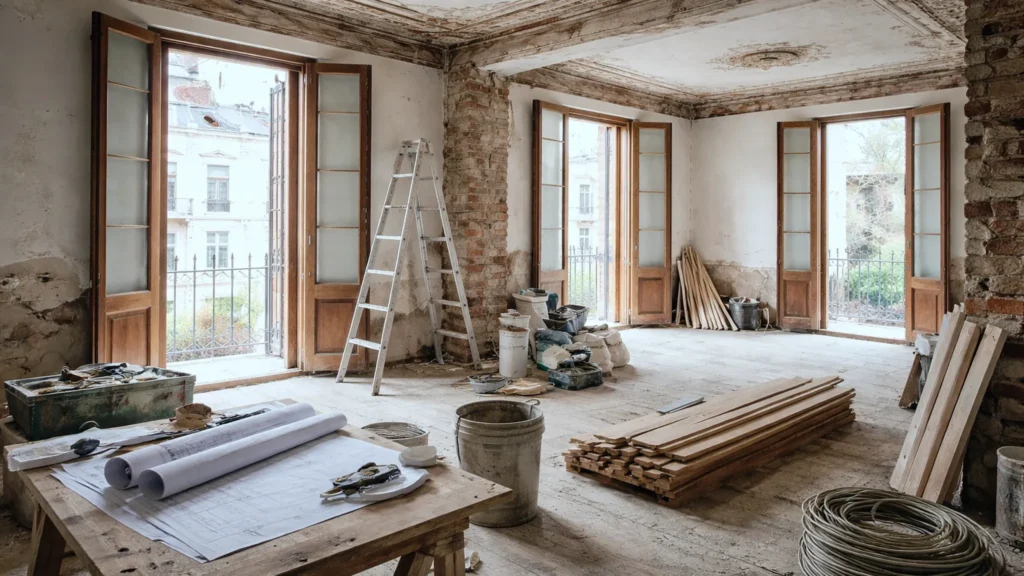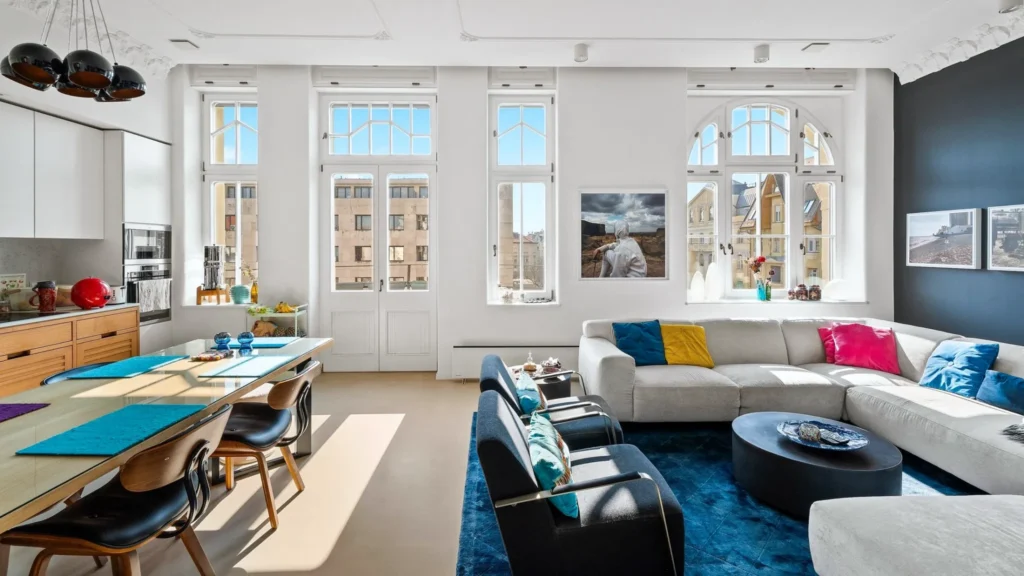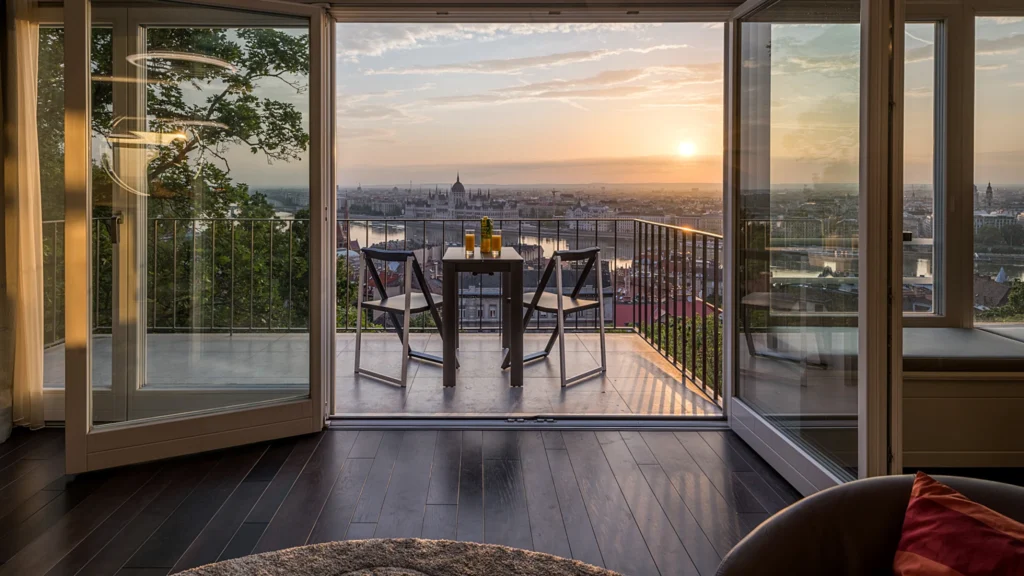
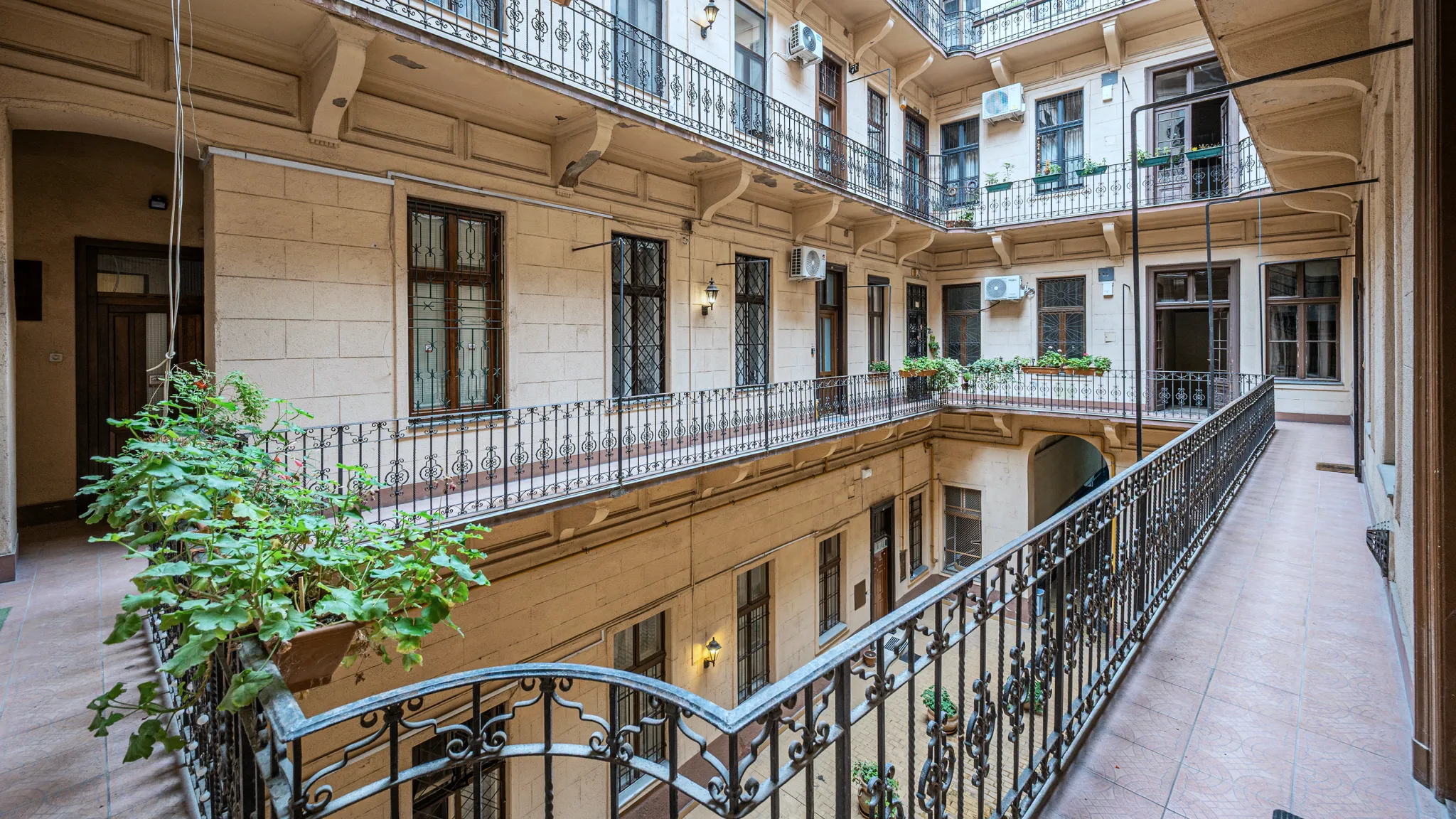
A Budapest apartment cannot be assessed in isolation.
The private interior may be beautifully renovated, well proportioned and filled with natural light, yet it remains part of a larger building whose condition, finances and management can materially affect everyday comfort, future expenditure and long-term marketability.
This is particularly relevant in Budapest, where the residential market includes historic courtyard buildings, early twentieth-century apartment houses, post-war housing and more recent condominium developments. Each may offer distinct architectural and practical advantages, but each also requires the buyer to look beyond the apartment door.
The relevant question is therefore not simply whether the apartment itself is attractive.
A considered acquisition should also ask whether the building supports the quality, usability and value of the home within it.
The Apartment and the Condominium Form One Investment
An apartment owner generally acquires both the private unit and a proportionate interest in the common parts of the condominium.
Depending on the building, these common elements may include:
- the structure and foundations;
- the roof;
- the street and courtyard facades;
- staircases and open-access galleries;
- the entrance and common corridors;
- lifts;
- main utility lines and vertical service shafts;
- communal gardens or courtyards;
- storage and service areas;
- other building systems serving more than one unit.
The physical and financial condition of these elements may influence the owner even where the apartment itself requires no immediate work.
A roof repair, lift replacement or facade reconstruction may involve substantial collective expenditure. Conversely, a well-maintained building with a responsible ownership community and realistic financial planning can support both residential quality and future saleability.
The apartment and the building should therefore be evaluated together rather than treated as independent assets.
For a closer assessment of light, spatial proportions, floor level, privacy and apartment-specific quality, see What Defines a High-Quality Budapest Apartment?
Begin with the Building’s Overall Condition
The first inspection should consider the building as a complete physical system.
A visually impressive entrance does not necessarily indicate that the roof, drainage, vertical pipes or electrical infrastructure are in good condition. Equally, a modest staircase does not automatically mean that the building is technically unsound.
The objective is to distinguish appearance from underlying condition.
Relevant areas may include:
- facades and visible cracking;
- roof coverings, flashings and rainwater drainage;
- balconies, open galleries and their supporting structures;
- staircase construction and handrails;
- basement moisture and ventilation;
- common doors and windows;
- courtyard surfaces and drainage;
- visible pipework and cabling;
- signs of repeated water penetration;
- recently completed repairs;
- areas temporarily supported, enclosed or restricted.
A buyer is not expected to diagnose structural or technical defects personally. Visible warning signs should instead indicate when a suitably qualified architect, engineer or building surveyor should be appointed.
The age of a building is not itself a defect. Many historic Budapest buildings possess durable structures, excellent proportions and substantial architectural value. The decisive issue is whether maintenance and renewal have kept pace with the building’s needs.
For a closer examination of renovation quality, technical condition and underlying value, see Renovated or Unrenovated: How to Assess the Real Value of a Budapest Property.
Facades, Roofs and Water Management
Facade and roof conditions deserve particular attention because defects in these areas can affect multiple apartments and may be expensive to remedy.
A facade review should consider:
- detaching render or decorative elements;
- cracks and previous repairs;
- stone, plaster and metal ornamentation;
- window surrounds and cornices;
- balconies and projecting structures;
- the condition of the courtyard elevation;
- evidence of temporary safety measures.
The roof should be considered together with gutters, downpipes, flashings and drainage. Water entering at roof level may become visible several floors below the original defect, while poorly managed rainwater can damage facades, courtyards and basement areas.
Recent repairs should not be evaluated only by their appearance. It is useful to establish:
- what work was completed;
- when it was completed;
- who designed and carried it out;
- whether warranties remain available;
- whether the intervention addressed the cause or only the visible symptom.
In architecturally significant buildings, facade and roof works may also require careful design and coordination with applicable heritage, architectural and local requirements.
Entrance, Staircase and Common Areas
The shared spaces often reveal how a condominium is managed.
A clean, well-lit and orderly entrance may indicate regular attention, although presentation alone is not conclusive. More informative signs include whether defects are repaired consistently, services are organised properly and alterations have been carried out with reasonable architectural discipline.
The review may include:
- entrance security;
- door and access-control condition;
- lighting;
- cleanliness;
- staircase surfaces and balustrades;
- windows and ventilation;
- fire-safety routes and obstructions;
- cabling and utility installations;
- waste-storage arrangements;
- bicycle and pram storage;
- the condition of mailboxes and common fittings;
- unauthorised storage in circulation areas.
For prime residential property, the entrance and staircase also influence arrival quality and representation.
A highly refined apartment may lose part of its appeal where every arrival involves a dark, poorly maintained or insecure common area. At the same time, an unrestored staircase with strong architectural character may offer long-term potential if a credible renovation plan and suitable funding already exist.
Open Galleries and Courtyard Structures
Open-access galleries are a defining feature of many traditional Budapest condominiums.
They contribute strongly to the architectural character of the building, but their technical condition should be understood. Relevant elements include:
- floor construction;
- waterproofing;
- surface falls and drainage;
- corrosion of metal components;
- stone or concrete deterioration;
- supporting brackets and beams;
- balustrade stability;
- junctions between the gallery and the facade.
Visible surface wear is not always evidence of structural failure, but recurring cracking, corrosion, temporary supports or water damage may justify specialist investigation.
The buyer should also consider everyday implications. Apartments opening directly onto a shared gallery may experience different levels of privacy, movement and noise than street-facing or internally accessed units.
Lift Access and Everyday Practicality
A lift can have a material effect on the usability and marketability of an upper-floor Budapest apartment.
The review should establish:
- whether a lift exists;
- which floors it serves;
- whether access is step-free;
- its approximate age and condition;
- its size and carrying capacity;
- how frequently it is unavailable;
- whether major repair or replacement is anticipated;
- whether the lift is owned and maintained by the condominium;
- whether access rights or keys are restricted.
A small historic lift may be adequate for ordinary use but unsuitable for moving large furniture. A modern lift may still involve high maintenance costs or technical dependencies.
Where no lift exists, the buyer should consider not only present personal requirements but also future occupiers, guests, children, older family members and eventual resale.
Common Building Services
The condition of common technical infrastructure may be less visible than the interior of the apartment but no less important.
The buyer should seek information about the age and condition of:
- incoming electrical supply;
- main electrical distribution;
- water mains;
- vertical water and drainage stacks;
- gas infrastructure;
- chimneys and flues;
- central heating equipment, where applicable;
- fire-protection installations;
- intercom and access systems;
- internet and communications infrastructure.
An apartment may contain new wiring and plumbing while still depending on older common systems outside its boundaries.
For example, renewing the internal water pipes does not resolve a deteriorated common riser. New electrical fittings do not necessarily increase the total capacity available to the property. A modern boiler may still depend on an unsuitable or insufficiently documented chimney system.
The interface between private and common systems should therefore be understood clearly.
The Condominium’s Financial Position
Physical inspection should be accompanied by financial review.
In Hungary, common-property maintenance and other condominium expenditure are generally funded by the owners through common charges in accordance with the applicable condominium documents and decisions. The Hungarian Condominium Act regulates the organisation, operation, budgeting and financial administration of condominiums.
The amount of the monthly common charge should not be considered in isolation.
A very low common charge may appear attractive but can indicate that insufficient funds are being accumulated for future maintenance. A higher amount may be reasonable where it includes services, insurance, regular maintenance or contributions to a renovation fund.
Relevant questions include:
- What does the common charge include?
- Is a renovation fund maintained?
- What reserves are currently available?
- Does the condominium have outstanding loans?
- Are there significant unpaid owner contributions?
- Have extraordinary payments recently been required?
- Are additional contributions already approved or expected?
- Does the annual budget realistically reflect the building’s condition?
- Are major contracts or long-term financial commitments in place?
A healthy reserve is not proof that every technical issue has been addressed. However, a building with no reserves, substantial arrears and several unavoidable projects may expose a new owner to early and unpredictable expenditure.
Review the Governing and Financial Documents
Before committing to the purchase, the buyer should request access—normally through the seller and the appointed legal advisers—to the documents necessary to understand the condominium.
Depending on the property and circumstances, these may include:
- the deed of foundation;
- the organisational and operational regulations;
- house rules;
- recent general-meeting minutes;
- the current annual budget;
- recent annual accounts;
- information on reserves and loans;
- resolutions concerning planned works;
- contracts for significant projects;
- available technical reports;
- insurance information;
- details of disputes or enforcement proceedings affecting the condominium.
The deed of foundation identifies the private units and the common-property structure. The organisational and operational regulations may address matters such as common charges, internal decision-making, house rules and the use of common areas. The Hungarian Condominium Act also provides for annual budgeting, accounting and the documentation of general-meeting decisions.
The purpose of reviewing these materials is not merely administrative.
Together, they can reveal:
- whether known defects have been discussed;
- whether repairs have repeatedly been postponed;
- how the condominium responds to emergencies;
- whether owners agree on investment priorities;
- whether short-term letting or commercial use causes conflict;
- whether substantial works have already been approved;
- whether financing has been arranged;
- whether litigation or internal disputes are ongoing.
One document rarely provides the complete picture. Patterns across several years may be more informative than the latest meeting minutes alone.
Verify the Legal Property Information
The apartment’s official land-registry information should be reviewed separately from the condominium’s internal documentation.
The Hungarian title deed records the property’s identifying information, ownership and legally relevant registered rights or facts, including matters such as mortgages, usufructs and easements. Official condominium information may also be available through the Hungarian land-registry systems.
The legal review should establish, among other matters:
- whether the seller is the registered owner;
- whether the apartment’s registered description corresponds with the property presented;
- whether storage rooms, parking spaces or other areas are separately registered or merely used by agreement;
- whether mortgages, usufructs or other rights are registered;
- whether additions or alterations correspond with the legal documentation;
- whether any common areas are being used exclusively without a clear legal basis.
A physically connected room, terrace or storage area is not necessarily part of the apartment’s registered private property.
The title deed, deed of foundation, floor plans and physical layout should therefore be considered together by the appointed Hungarian legal professionals.
Planned Works May Be an Advantage or a Liability
The existence of planned construction is not automatically negative.
A properly designed and financed facade renovation, lift modernisation or roof replacement may materially improve the building and support long-term value.
The relevant questions are:
- Has the work been formally approved?
- Is the scope clearly defined?
- Has a designer or contractor been appointed?
- Are permits or consents required?
- How will the work be financed?
- What amount will be payable by the apartment owner?
- Is the budget fixed or preliminary?
- When is construction expected to begin?
- How long may disruption continue?
- Does the condominium have a realistic contingency?
A project described informally as “planned” may remain uncertain for years. Conversely, a project supported by resolutions, designs, funding and contracts may represent a credible improvement programme.
Buyers should distinguish aspiration from an implementable plan.
Building Management and Ownership Culture
The quality of management can influence how effectively technical and financial problems are addressed.
A well-managed condominium typically demonstrates:
- organised records;
- clear communication;
- regular budgeting and accounting;
- timely collection of charges;
- planned maintenance;
- documented decisions;
- transparent procurement;
- appropriate insurance;
- prompt response to urgent defects.
The common representative or management company need not provide a perfect building. Older properties inevitably require continuing work.
The more important question is whether problems are identified, prioritised and managed in a disciplined manner.
The ownership community also matters. Repeated conflict, unpaid contributions or the inability to approve necessary works can delay even technically straightforward improvements.
For a buyer who expects to spend substantial periods outside Hungary, reliable management and communication may be particularly important. This connects closely with the practical ownership considerations discussed in Budapest as a Second-Home Destination: Lifestyle, Accessibility and Year-Round Use.
Historic Character and Future Expenditure
Historic Budapest buildings often offer qualities that cannot easily be recreated:
- generous ceiling heights;
- substantial masonry construction;
- decorative facades;
- crafted ironwork;
- stone staircases;
- landscaped or proportioned courtyards;
- distinctive entrance sequences;
- established urban settings.
These characteristics may support lasting demand, but their maintenance can require specialist work and significant expenditure.
Architectural value should therefore be assessed together with:
- current physical condition;
- maintenance requirements;
- the availability of suitable contractors;
- regulatory constraints;
- ownership support;
- financial capacity.
A restored historic building may justify a stronger market position. An unrestored building may still offer excellent potential where its structure is sound and the ownership community has a credible plan.
The risk arises where architectural complexity is combined with prolonged neglect, insufficient reserves and limited ability to reach collective decisions.
Newer Buildings Require Due Diligence as Well
Recent construction should not be assumed to eliminate building-level risk.
In newer condominiums, the review may focus on different issues:
- waterproofing of terraces and underground areas;
- facade systems;
- mechanical ventilation;
- central heating and cooling;
- lifts and automated systems;
- underground parking;
- access control;
- building-management contracts;
- warranties;
- defects reported after completion;
- unusually high operating costs.
Complex systems can improve convenience but may also create dependence on specialist maintenance, software, replacement parts and long-term service contracts.
The buyer should establish whether documentation, warranties and maintenance records are available and whether recurring technical problems have emerged.
The distinction is therefore not simply old building versus new building. The relevant issue is whether the architecture, construction, management and operating model work together reliably.
Common Charges Should Be Assessed in Context
Comparing common charges between buildings can be misleading unless the included services are understood.
One building’s monthly charge may cover little more than cleaning, insurance and basic administration. Another may include heating, water, security, reception, gardening, lift maintenance or contributions to a significant renovation reserve.
The buyer should separate:
- ordinary operating costs;
- utility consumption;
- maintenance contracts;
- renovation-fund contributions;
- loan repayments;
- exceptional temporary charges.
A low common charge is not necessarily efficient, and a high common charge is not necessarily excessive.
The better question is whether the cost corresponds with the services provided, the building’s technical needs and the financial strategy of the condominium.
Independent Review Should Be Proportionate
The depth of due diligence should reflect the value, age and complexity of the acquisition.
For a substantial or technically complex property, appropriate review may involve:
- a Hungarian real-estate lawyer;
- an architect or building surveyor;
- a structural engineer;
- an electrical or mechanical specialist;
- an accountant or financial adviser where significant condominium liabilities exist.
The purpose is not to guarantee that no future expense will arise. Every building requires maintenance and eventual renewal.
The objective is to identify the principal physical, legal, financial and operational conditions before the buyer enters an unconditional commitment.
For an overview of the wider transaction process, see Buying Property in Hungary: Key Steps for International Buyers.
Questions to Ask Before Buying
Before completing the assessment, the buyer should be able to answer the following questions:
- What parts of the building require immediate or medium-term work?
- Which major projects have been completed recently?
- What projects are planned or already approved?
- What reserves and financial obligations does the condominium have?
- Are owner arrears significant?
- What does the common charge include?
- Is the lift reliable and suitable for the apartment?
- Are the roof, facades, galleries and common services in reasonable condition?
- Does the building have recurring moisture, drainage or structural problems?
- Are the management and financial records organised?
- Do the legal documents correspond with the physical property?
- Are parking, storage or terrace rights clearly documented?
- Could planned expenditure materially affect the total acquisition cost?
- Does the building’s condition support the price attributed to the apartment?
Where these questions cannot be answered, the uncertainty itself should be reflected in the buyer’s decision-making.
Value Extends Beyond the Apartment Door
A high-quality apartment is supported by more than its interior design.
Its long-term residential and market value also depends on the condition of the structure around it, the reliability of common systems, the financial capacity of the condominium and the willingness of the ownership community to maintain the building responsibly.
A well-managed historic building can provide architectural character and lasting appeal. A properly operated modern condominium can offer comfort and convenience. Either can be a strong acquisition where the private apartment and the shared building are assessed as one coherent proposition.
The most considered purchase is therefore not simply the apartment with the most attractive rooms.
It is the property in which the apartment, the building and the ownership structure together support the buyer’s intended use, financial expectations and long-term objectives.
Sources and Further Reading
National Legislation Database
Act CXXXIII of 2003 on Condominiums.
National Legislation Database
Act C of 2021 on the Land Registry.
National Legislation Database
Government Decree No. 179/2023 (V. 15.) Implementing the Land Registry Act.
Digital Citizenship Programme
Tasks Before Purchasing an Apartment – Property Records, Technical Documentation and the Purchase Process.
Royal Institution of Chartered Surveyors
Home Survey Standard, First Edition.
This article provides general property, architectural and condominium information only and does not constitute legal, technical, tax or financial advice. The condition, documentation, ownership structure and liabilities of an individual property and condominium should be reviewed by appropriately qualified Hungarian professionals.
Related Insights