
The Budapest prime residential market entered 2026 following a period of exceptionally rapid residential price growth. The available data describe a market in which values have risen substantially, buyer composition has shifted and the supply of new homes has begun to expand. At the same time, transaction activity has become less uniform, reinforcing the importance of distinguishing broad market averages from the characteristics of individual properties.
For owners, purchasers and private investors, the central question is therefore not simply whether Budapest property prices have increased. It is how the changing market environment affects selected residential assets whose location, architectural quality, condition and scarcity may place them outside the patterns suggested by city-wide averages.
A market shaped by rapid repricing
According to the Magyar Nemzeti Bank, nominal residential property prices increased by 23.5 per cent nationwide in 2025, equivalent to real price growth of 19.0 per cent. The central bank also estimated that private individuals completed approximately 152,000 housing transactions during the year, around 3 per cent more than in 2024. In the first quarter of 2026, however, transaction numbers were 18 per cent lower than a year earlier.
This combination of strong price appreciation and more moderate transaction momentum suggests that the market has not strengthened evenly. Properties may continue to be offered at progressively higher prices, but this does not mean that every asking price is supported by the same depth of demand.
The latest European figures provide useful context. In the first quarter of 2026, house prices across the European Union were 5.1 per cent higher than a year earlier and 1.2 per cent higher than in the preceding quarter. Budapest therefore forms part of a wider European environment of rising residential values, although the recent Hungarian rate of appreciation has been substantially stronger than the EU average.
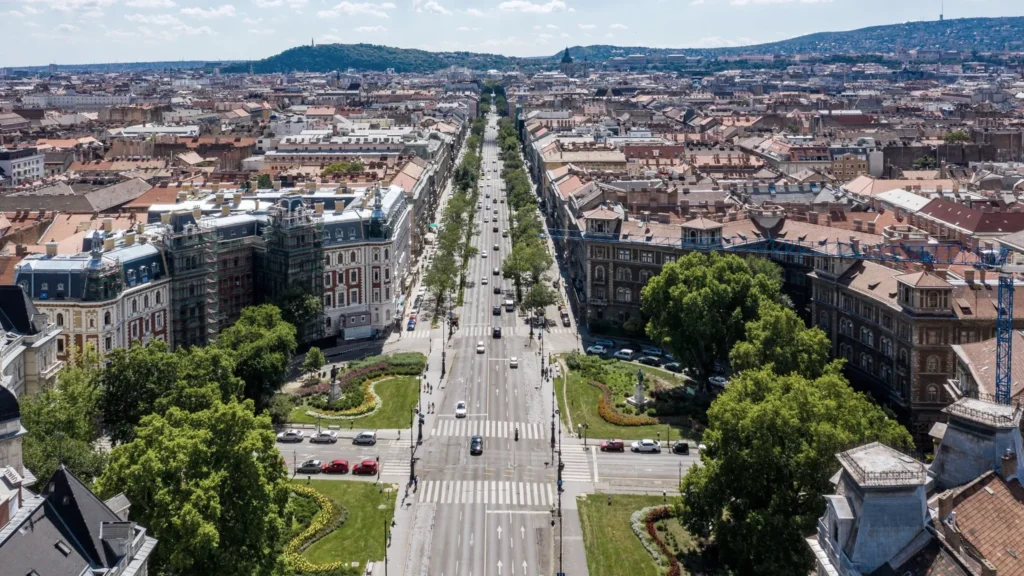
Budapest is not one residential market
The Hungarian Central Statistical Office reported that the average square metre price of second-hand homes in Budapest reached approximately HUF 1.2 million in the fourth quarter of 2025, representing an annual increase of 21 per cent.
Within this overall figure, average prices reached approximately:
- HUF 1.0 million per square metre for detached houses
- HUF 1.2 million per square metre for panel flats
- HUF 1.3 million per square metre for non-panel condominium apartments
Price growth also varied significantly between different parts of the capital. Compared with the fourth quarter of 2024, average square metre prices rose by approximately 25 per cent in the outer Pest districts, 24 per cent in other Buda districts and transitional Pest districts, 17 per cent in the inner Pest districts and 16 per cent in the Buda hillside districts.
These figures are important indicators, but they remain broad statistical averages. They combine properties of different size, condition, building quality, floor level, orientation, outlook and legal status. They should therefore not be treated as direct valuation benchmarks for an individually selected prime property.
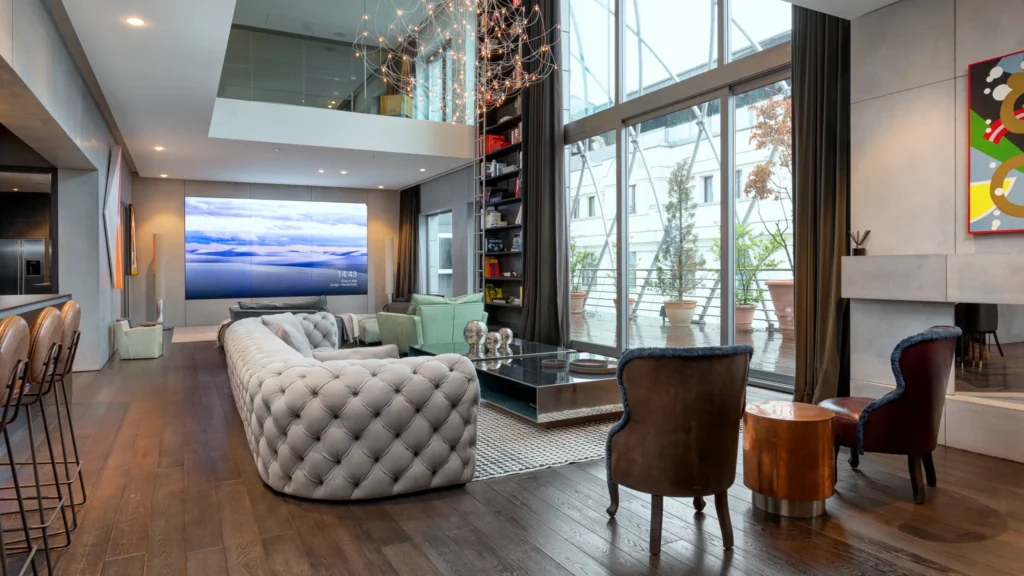
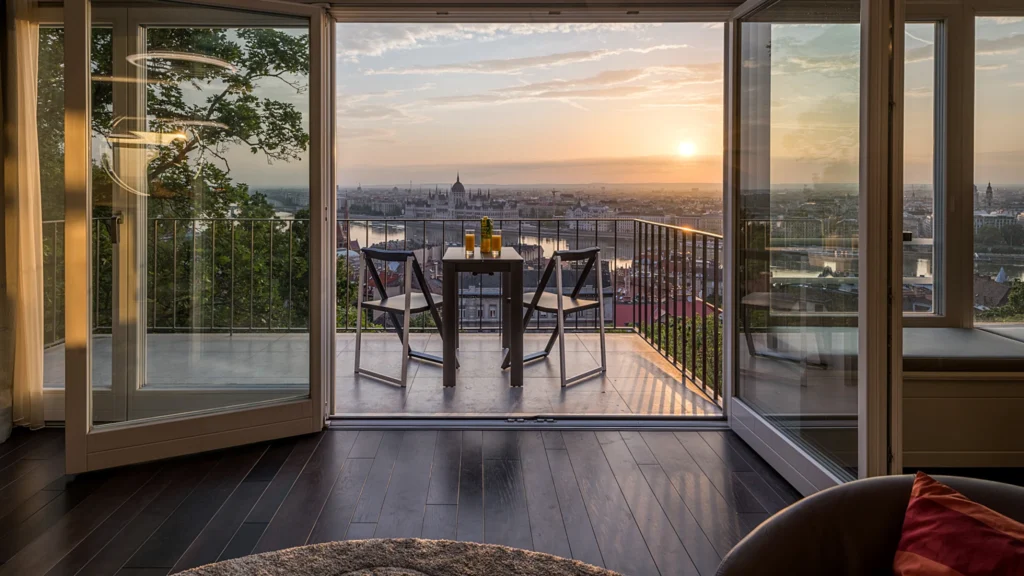
A renovated apartment overlooking the Danube, a well-preserved historic residence in District V, a contemporary penthouse or a villa in the Buda hills may operate within a much narrower competitive set than the district or city-wide data suggest.
For a closer analysis of scarcity and durable demand across Budapest’s principal prime micro-markets, see Budapest’s Prime Residential Districts: Where Demand and Scarcity Intersect.
Supply is expanding, but quality remains selective
The supply of newly built homes in Budapest is increasing. In the first quarter of 2026, approximately 22,000 homes were under development and being marketed in the capital, 46 per cent more than a year earlier. The number of new homes still available for purchase reached 9,490 by March 2026, following a 63 per cent annual increase. The average asking price of new homes in Budapest had risen to approximately HUF 1.85 million per square metre by the end of March.
A larger development pipeline may provide buyers with more choice and may gradually reduce pressure in some parts of the new-build market. Nevertheless, a higher number of units does not automatically translate into a corresponding increase in genuinely prime residential supply.
Within the premium segment, quality remains highly specific. The determining factors may include:
- an exceptional or irreplaceable location
- architectural integrity
- proportions and ceiling height
- natural light and orientation
- a functional and adaptable floor plan
- views or private outdoor space
- lift and parking availability
- technical condition and energy performance
- privacy and building management
- renovation quality and documentation
Supply can therefore expand in numerical terms while the availability of properties combining several of these qualities remains limited.
For a detailed framework for assessing natural light, spatial proportions, building condition, privacy and renovation quality, see What Defines a High-Quality Budapest Apartment?
Changing demand requires closer interpretation
The introduction of the Home Start Programme materially changed the composition of the wider residential market. In Budapest, the share of first-time buyers increased from approximately 25 per cent to 40 per cent within a year. At the same time, purchasers buying for investment purposes became more cautious, partly in response to lower rental yields and increasing concerns about overvaluation.
These developments are particularly relevant to the mainstream market, where affordability, borrowing capacity and eligibility for subsidised financing directly influence purchasing decisions.
Prime residential demand may respond differently. Purchasers considering a rare city-centre apartment, a high-quality villa or a distinctive architectural property are often evaluating a broader combination of lifestyle, capital preservation, scarcity and long-term usability. Their decisions may be less closely aligned with mass-market averages, but they are not independent of price discipline.
Even within the premium segment, buyers increasingly distinguish between genuinely scarce quality and a property that is simply offered at a premium price.
For a broader framework for matching property type, location and long-term ownership objectives, see What to Buy in Budapest: Matching Property Type, Location and Buyer Objectives.
What may support resilience in the prime segment?
A prime property is not defined by price alone. High asking prices can be found throughout a rising market, but lasting value generally depends on qualities that cannot easily be reproduced.
Properties may demonstrate greater resilience where they offer a convincing combination of:
- a location with enduring domestic and international demand
- architectural or historical character
- high-quality refurbishment or construction
- clear and secure ownership documentation
- efficient and comfortable everyday use
- scarcity within their immediate competitive market
- appropriate positioning and realistic pricing
These characteristics do not eliminate market risk. They can, however, reduce direct substitutability. A purchaser may have many apartments to choose from, but only a small number may offer the same view, building, proportions, condition and address.
This distinction becomes increasingly important when the broader market moves from rapid, generalised appreciation towards more selective buyer behaviour.
Pricing discipline matters
Strong historical price growth can encourage sellers to rely on optimistic comparisons or to interpret exceptional asking prices as evidence of achieved market value. This approach is particularly risky in the prime segment, where publicly available comparables are often limited and the most relevant transactions may not be widely disclosed.
An appropriate pricing strategy should consider more than headline square metre rates. It should also reflect:
- the property’s exact condition
- renovation requirements
- building-level risks
- floor and orientation
- legal and technical documentation
- the realistic depth of the target buyer group
- competing properties available at the same time
- the owner’s preferred timing and level of discretion
A carefully positioned property may attract stronger engagement than one introduced to the market at an unsupported price and repeatedly adjusted afterwards.
For a practical seller-side framework covering pricing, presentation, market positioning and negotiation, see Selling Property in Hungary: Key Steps for International Owners.
Discretion can also play an important role. For certain properties and owners, a controlled introduction to qualified purchasers may protect privacy and preserve negotiating flexibility. For others, broader market exposure may be more appropriate. The correct approach depends on the asset and the client’s objectives rather than on a single standard sales method.
Outlook: selective rather than uniform strength
The available data point to a Budapest residential market characterised by high price levels, substantial recent appreciation, changing demand and a rapidly expanding new-build pipeline.
These conditions do not support a simple conclusion that every residential property will continue to perform in the same way. A more plausible interpretation is that differentiation will become increasingly important.
Well-located, carefully maintained and realistically priced properties may remain comparatively well positioned. Homes with compromised layouts, unresolved technical issues or ambitious pricing unsupported by their individual qualities may face a more selective buyer response.
For a closer distinction between cosmetic presentation, technical condition and defensible long-term value, see Renovated or Unrenovated: How to Assess the Real Value of a Budapest Property.
The prime market should therefore be approached property by property. City-level and district-level data provide essential context, but they cannot replace an individual assessment of location, quality, condition, liquidity and the objectives of the client.
Market intelligence is most valuable when it helps distinguish general market movement from the specific characteristics that determine the position of an individual property.
Sources and Further Reading
Magyar Nemzeti Bank
Housing Market Report, May 2026.
Hungarian Central Statistical Office
Housing Prices, Housing Price Index, Q4 2025.
Eurostat
House Prices and Rents Continued to Rise in Q1 2026.
Related Insights