Choosing the right Budapest district is not simply a question of selecting a district number or identifying a prestigious address.
The city offers several distinct residential environments within a relatively compact urban area. A hillside villa in Buda, a period apartment in historic Pest and a residence overlooking the Danube may all represent high-quality property, yet they support very different patterns of daily life.
The most appropriate location depends on how the property will actually be used: as a principal residence, a family home, a second home, a city base or a long-term investment. Transport, building character, access to green space, noise, views and everyday convenience should therefore be considered together rather than in isolation.
The District Decision Is a Lifestyle Decision
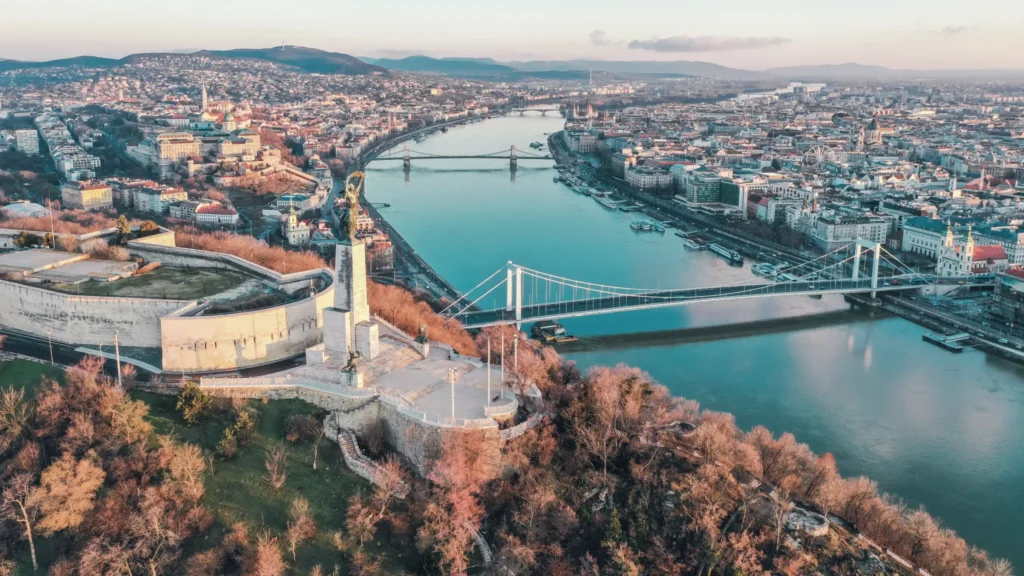
Budapest is formed by the contrast between hilly Buda, predominantly flat Pest and the Danube running between them. The river does not merely divide the city geographically; it helps define its architecture, views, transport patterns and residential character.
A buyer choosing between these settings is effectively choosing between different relationships with the city.
The Buda Hills generally offer greater privacy, more vegetation and lower-density residential surroundings. Historic Pest provides architectural richness, walkability and immediate access to cultural and commercial life. Riverside properties may combine centrality with open views and a stronger sense of separation from the dense urban fabric.
None of these environments is universally superior. Their suitability depends on the buyer’s priorities and on the exact micro-location of the property.
For a market-focused examination of scarcity and durable demand across Budapest’s prime micro-markets, see Budapest’s Prime Residential Districts: Where Demand and Scarcity Intersect.
Buda Hills: Privacy, Greenery and Residential Calm
The Buda side becomes progressively greener and less densely built as it rises away from the Danube. In many hillside neighbourhoods, larger apartment buildings give way to villas, detached houses and smaller residential developments, with more space available for gardens and mature vegetation.
This setting can be particularly attractive to buyers seeking:
- a quieter residential environment;
- private outdoor space;
- greater separation from neighbouring buildings;
- hillside or city panoramas;
- proximity to woodland and recreational areas;
- a family-oriented principal residence.
The advantages of a hillside location should, however, be assessed alongside its practical implications.
Steeper streets, longer distances from everyday services and more complex connections may make some addresses more dependent on a car or taxi. Public transport can remain effective, but the final section of a journey may involve buses, walking on a gradient or changing between services. Budapest’s wider transport network is extensive, although accessibility varies considerably at the level of the individual street.
A property in the Buda Hills should therefore be evaluated not only for its view and privacy but also for:
- access in winter conditions;
- distance from schools and daily services;
- parking and garage arrangements;
- pedestrian accessibility;
- travel time during peak periods;
- the ease of reaching the city centre without a car.
A peaceful location may be highly desirable for permanent family use while proving less convenient for a buyer who expects to walk to restaurants, offices and cultural venues every day.
Historic Pest: Architecture, Walkability and Urban Intensity
The historic Pest districts offer one of Budapest’s most distinctive residential environments.
The inner city contains a substantial concentration of nineteenth- and early twentieth-century apartment buildings, broad avenues, urban squares and neighbourhoods developed around commerce, culture and public transport. Parts of the Danube embankment, the historic centre, Andrássy Avenue and the Millennium Underground form part of Budapest’s UNESCO World Heritage property.
For many international and local buyers, the principal appeal of historic Pest lies in its immediacy. Restaurants, cafes, theatres, offices, shops and public transport may all be available within a short walk.
This can make a central apartment particularly suitable as:
- a city residence;
- a second home;
- a professional base;
- a property intended for frequent short stays;
- a long-term residence for an owner who values urban independence.
The building stock is exceptionally varied. Two apartments located only a few streets apart may differ substantially in natural light, ceiling height, common-area condition, lift access, courtyard proportions and renovation quality.
To distinguish cosmetic refurbishment from durable technical and architectural quality, see Renovated or Unrenovated: How to Assess the Real Value of a Budapest Property.
The district name or postcode therefore provides only a broad indication of character. The individual building and the exact position of the apartment within it often matter more.
Urban intensity is also part of the equation. A central property may offer excellent walkability while being exposed to traffic, restaurants, nightlife, deliveries or intensive pedestrian activity. The same street can feel very different during working hours, late evenings and weekends.
Historic Pest works best for buyers who actively value the energy of the city rather than merely tolerate it.
Riverside Living: Openness, Views and a Distinct Urban Perspective
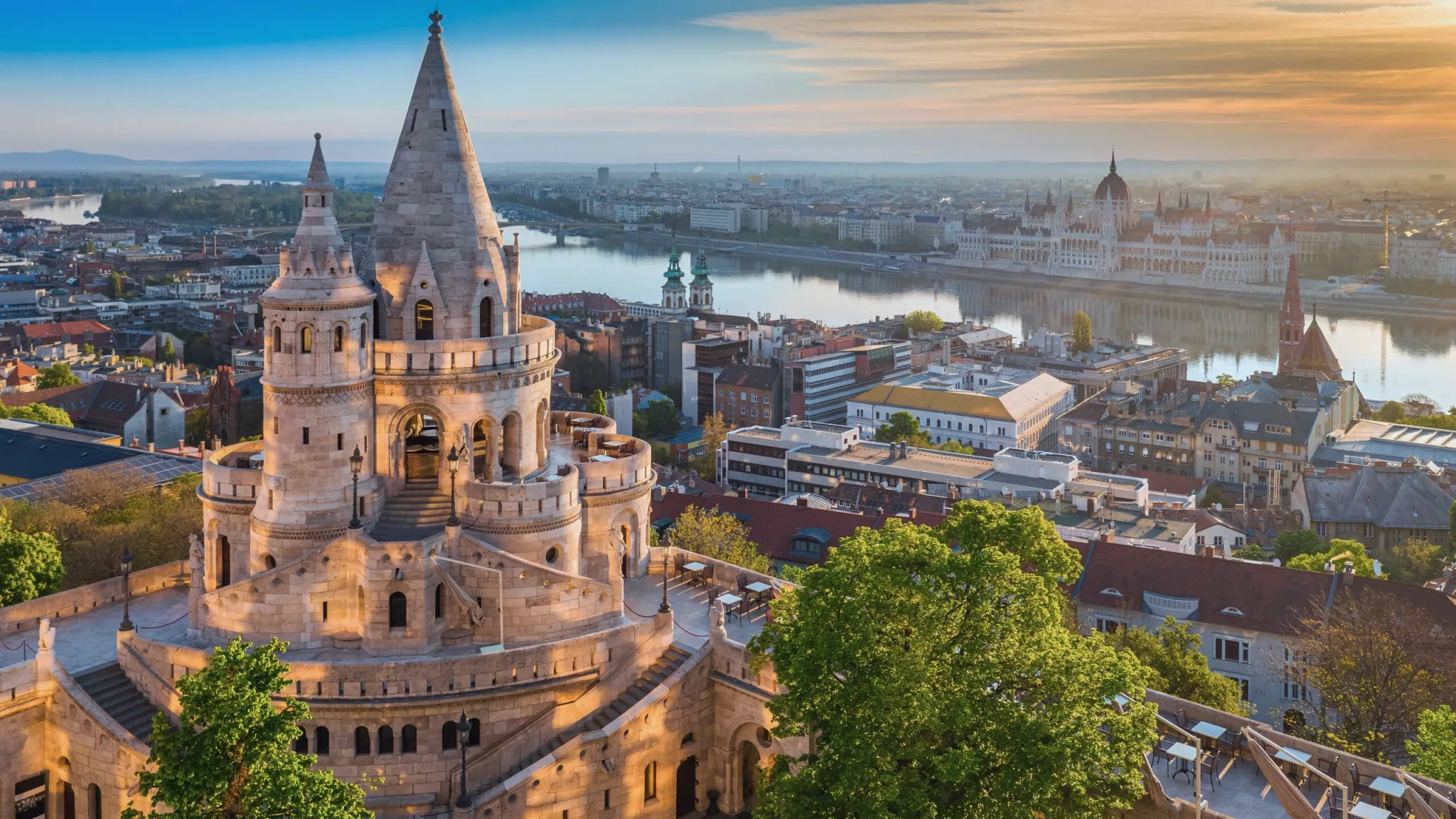
Residential properties near the Danube can offer a combination that is comparatively rare in a dense European capital: central urban living with long views, open sky and a direct relationship with the city’s most recognisable landscape.
Budapest’s riverbanks, bridges and historic skyline form a central part of the city’s architectural identity and World Heritage setting.
Riverside living can include several different residential types:
- historic apartments facing the Danube;
- homes located one or two streets behind the embankment;
- Buda-side properties overlooking Pest;
- Pest-side apartments with views toward Castle Hill;
- contemporary developments near regenerated waterfront areas;
- quieter residential settings farther from the historic centre.
A direct river view can add light, visual depth and a strong sense of place. However, it should not be assessed independently from the apartment’s orientation, glazing, floor level and the activity of the road or tram line below.
A front-row river property may provide an exceptional panorama but experience significant traffic or tourism. A residence slightly removed from the embankment may retain convenient access to the river while offering greater privacy and acoustic comfort.
The best riverside choice is therefore not necessarily the property closest to the water, but the one in which view, access, noise and interior quality are successfully balanced.
Connectivity and Everyday Mobility
Budapest has an extensive public transport system based on metro lines, trams, buses, trolleybuses and suburban rail services. The four metro lines and the central tram network connect many of the city’s principal residential and commercial areas.
Nevertheless, a citywide transport map does not reveal the full experience of a specific address.
When assessing a location, it is useful to examine:
- the walking time to the nearest reliable service;
- the number of changes required for regular journeys;
- evening and weekend connections;
- access to railway stations and the airport;
- the availability of parking;
- cycling and pedestrian conditions;
- the effect of planned or temporary transport changes.
A property located near a major tram or metro line may provide greater practical independence than a more prestigious but less connected address.
For a second home, direct and predictable access may be more valuable than proximity to a particular school or workplace. For permanent residents, the quality of daily journeys may have a greater influence on long-term satisfaction than the initial visual appeal of the neighbourhood.
For a fuller assessment of accessibility, maintenance, security and year-round use from a second-home perspective, see Budapest as a Second-Home Destination: Lifestyle, Accessibility and Year-Round Use.
Building Stock and Residential Character
Each of Budapest’s principal residential settings is associated with characteristic building types, but considerable variation exists within every area.
The Buda Hills include detached villas, smaller condominiums, modern houses and larger residential developments. Historic Pest is dominated by period apartment buildings, although their condition and architectural quality vary widely. Riverside locations may include historic facades, post-war buildings and contemporary developments within the same broad neighbourhood.
The building should therefore be assessed as part of the location decision.
Relevant questions include:
- Does the architecture suit the intended use?
- Are the common areas appropriately maintained?
- Is there a reliable lift?
- Does the building provide parking or storage?
- How effectively is the condominium managed?
- Are major facade, roof or mechanical works expected?
- Does the apartment’s position within the building support light, privacy and quiet?
For a more detailed framework for assessing natural light, spatial proportions, building condition, privacy and everyday usability, see What Defines a High-Quality Budapest Apartment?
A desirable district cannot compensate fully for a poorly managed building. Equally, a strong building and exceptional apartment may perform well even in a street that is less widely recognised.
Green Space and Access to Outdoor Life
Budapest’s green environment is unevenly distributed. Large forested and protected areas are more prominent outside the densest urban districts, while inner-city residents rely more heavily on parks, tree-lined streets, squares, riverbanks and smaller public gardens.
In the Buda Hills, proximity to nature can form part of everyday life. In Pest, the relevant question is often not how much greenery surrounds the property, but how easily useful green space can be reached.
A park visible on a map may not necessarily meet the owner’s needs. The practical assessment should consider:
- walking distance;
- landscape quality and maintenance;
- opportunities for children or dogs;
- running and cycling routes;
- seasonal usability;
- the relationship between the park and surrounding traffic.
Riverside promenades and islands can also provide valuable outdoor space, although the experience differs from that of a neighbourhood garden or woodland environment.
Panorama, Orientation and Micro-Location
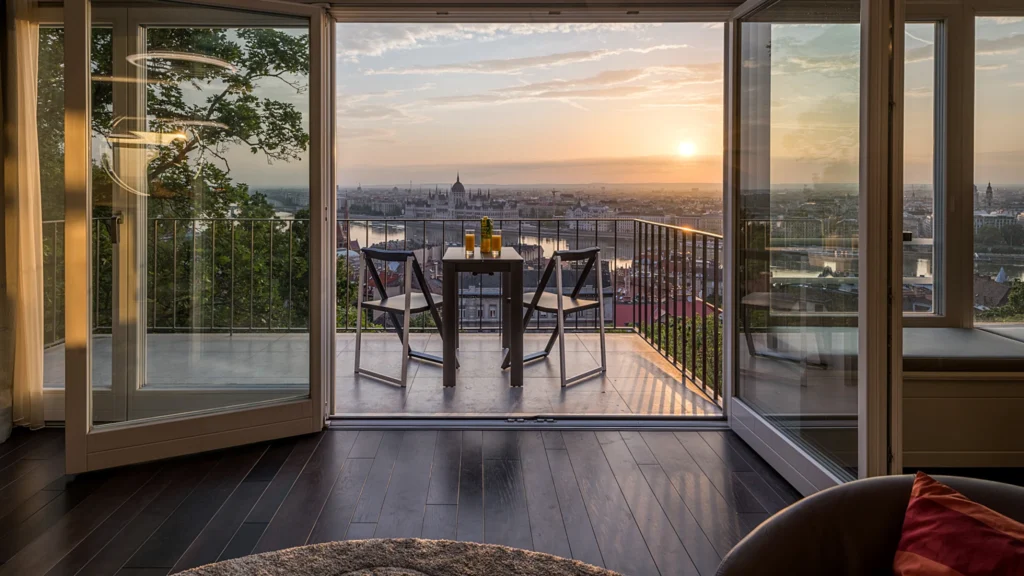
A Budapest panorama can be a significant residential asset, particularly where it includes the Danube, Castle Hill, the Parliament, the city skyline or the surrounding hills.
Views should nevertheless be assessed carefully.
The buyer should determine whether the panorama is:
- protected by the existing urban structure;
- dependent on undeveloped neighbouring land;
- visible from the main living areas or only from a terrace;
- attractive throughout the year;
- accompanied by excessive solar exposure or wind;
- balanced by an acceptable level of privacy.
Orientation may be equally important. A south- or west-facing hillside property can receive abundant light but may require effective summer shading. A riverside apartment may have a spectacular outlook while receiving limited direct sunlight. A central Pest apartment without a landmark view may offer more balanced daylight and greater everyday comfort.
The quality of the exact position within the street, building and floor is often more important than the general reputation of the district.
Urban Intensity, Noise and Privacy
Residential quality depends partly on the degree of urban activity that the owner considers desirable.
For some buyers, activity creates convenience and a sense of connection. For others, the same conditions represent noise, congestion and a lack of privacy.
Potential noise sources include:
- road and tram traffic;
- restaurants and terraces;
- nightlife;
- schools and playgrounds;
- deliveries and waste collection;
- construction;
- internal courtyards and external corridors;
- mechanical equipment.
A property should ideally be visited at more than one time of day. A quiet morning inspection may not reveal evening activity, while a weekday viewing may not represent weekend conditions.
The arrangement of the apartment can mitigate some external factors. Street-facing reception rooms and courtyard-facing bedrooms may offer an effective compromise. High-quality windows can reduce traffic noise, but they do not resolve poor ventilation, courtyard disturbance or noise transmitted through the building structure.
Long-Term Usability
The most appropriate district is not necessarily the one that best suits the buyer’s present circumstances for the next twelve months.
A long-term assessment should consider how the property may function if:
- the owner spends more time in Budapest;
- children or older family members use the property;
- mobility requirements change;
- remote working becomes more important;
- the home is rented temporarily;
- the property is eventually resold.
A hillside house with extensive outdoor space may work exceptionally well for a family but require significant maintenance. A central period apartment may remain highly convenient but become less practical without a lift. A riverside residence may offer lasting visual appeal but need careful management of traffic noise and summer heat.
Adaptability is therefore a central component of residential quality.
Choosing According to Use
For a principal family residence, privacy, green space, schools, parking and functional daily transport may take priority.
For a central city home, walkability, architectural character, public transport and access to services may be more important.
For a second home, ease of arrival, low maintenance, security and the ability to enjoy the city without a car may be decisive.
For a long-term investment, the widest possible future buyer or tenant appeal may favour locations that combine strong transport, recognised neighbourhood character and practical building quality.
The buyer’s intended use should therefore be defined before individual properties are compared.
For a broader framework for matching property type, location and ownership objectives, see What to Buy in Budapest: Matching Property Type, Location and Buyer Objectives.
A Balanced Location Assessment
Buda Hills, historic Pest and the Danube riverside each offer compelling forms of Budapest living.
The Buda Hills provide greenery, privacy and residential calm. Historic Pest offers architecture, walkability and cultural immediacy. Riverside locations create openness, views and a particularly strong connection with the identity of the city.
The correct choice depends less on a general hierarchy of districts than on the relationship between lifestyle, building quality and micro-location.
A considered property search examines not only where an apartment is located, but how the owner will move through the city, use the surrounding neighbourhood and experience the property over time.
Sources and Further Reading
UNESCO World Heritage Centre
Budapest, including the Banks of the Danube, the Buda Castle Quarter and Andrássy Avenue.
Budapest Transport Centre – BKK
Travel Options in Budapest.
Municipality of Budapest
Green Spaces in Budapest.
Budapest Brand / Budapestinfo
Outdoor Programs – Buda Hills and Green Budapest.
This article provides general property and lifestyle information. The suitability of a particular Budapest location should be assessed in relation to the individual property, the buyer’s intended use and current local conditions.
Related Insights