Prime residential districts in Budapest are not defined by a single, uniform boundary.
High-value properties are distributed across several distinct parts of the city: the historic centre of Pest, the Danube embankments, the Castle area, the lower slopes of Buda and the greener residential neighbourhoods of the Buda Hills. Even within these recognised locations, however, quality and marketability can vary substantially from one street, building or floor to another.
A prime address therefore cannot be identified by district number alone. Durable demand usually forms where location is reinforced by architectural quality, natural light, views, privacy, accessibility and a supply of comparable properties that cannot easily be expanded.
Prime Is a Micro-Market, Not a District Label
The term prime residential is often used too broadly.
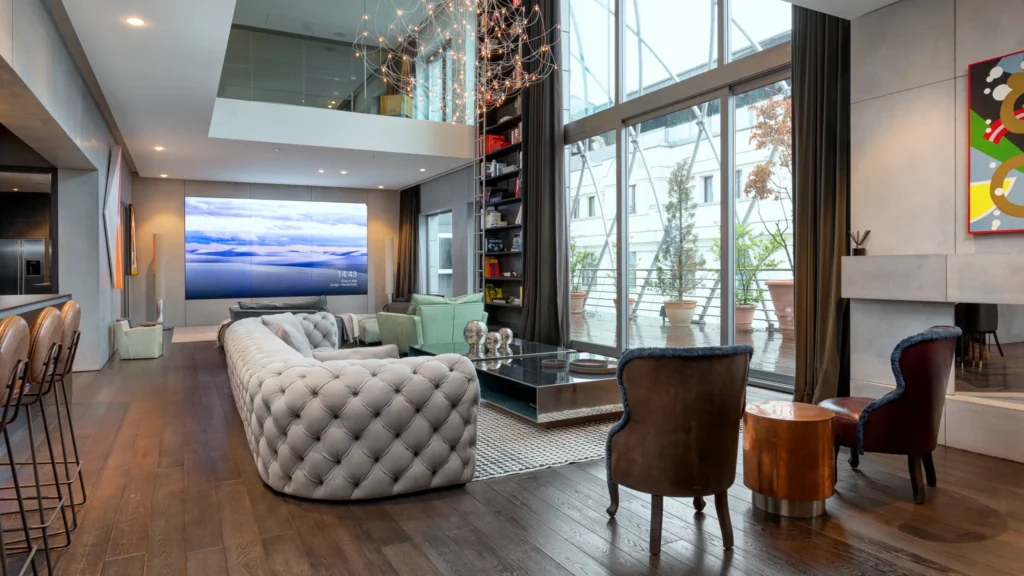
An apartment may be situated in a prestigious central district yet face a narrow, dark courtyard in a poorly maintained building. Conversely, a property outside the most widely recognised streets may offer exceptional light, coherent architecture, quiet surroundings and a protected panorama.
The relevant market is therefore rarely the entire district. It is more often a limited group of streets, buildings or property types sharing particular characteristics.
For a lifestyle-based comparison of Budapest’s principal residential settings, see Choosing the Right Budapest District: Buda Hills, Historic Pest and Riverside Living.
Examples include:
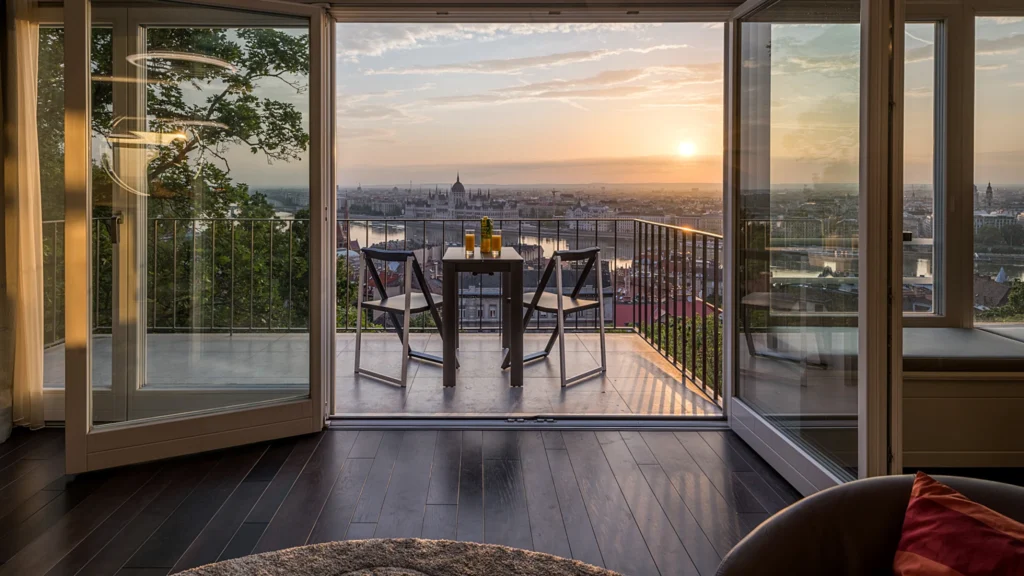
- Danube-facing apartments with unobstructed views;
- well-preserved period residences near established cultural and institutional centres;
- villas and low-density homes in the Buda Hills;
- upper-floor corner apartments with strong natural light;
- architecturally coherent buildings with maintained common areas;
- high-quality contemporary homes in locations where new construction is structurally limited.
This micro-market approach is particularly important in Budapest because the city’s residential stock is highly heterogeneous. Properties of similar size in the same neighbourhood may differ significantly in ceiling height, orientation, building condition, lift access, privacy and renovation standard.
Scarcity Is Primarily Qualitative
Budapest contains a large number of residential properties, and new housing supply is currently expanding.
In the first quarter of 2026, projects involving approximately 22,000 homes were under development and being marketed in Budapest, representing the highest new-home supply recorded in the preceding ten years. The number of available new homes also rose substantially.
This does not mean that prime residential scarcity has disappeared.
Most new development cannot reproduce the qualities of a historic corner apartment overlooking the Danube, a villa on an established hillside plot or a residence in a protected nineteenth-century urban setting. The supply of housing may increase in numerical terms while the stock of properties with genuinely irreplaceable characteristics remains limited.
Prime scarcity is therefore not simply a shortage of dwellings. It is a shortage of combinations:
- recognised location and quiet exposure;
- historic character and technically sound condition;
- generous proportions and efficient layout;
- view and privacy;
- centrality and residential calm;
- architectural distinction and manageable ownership costs.
Where several of these characteristics occur together, buyer substitution becomes more difficult. A purchaser unable to secure one property may not regard the next apartment in the same postcode as an adequate alternative.
The Danube and Central Pest
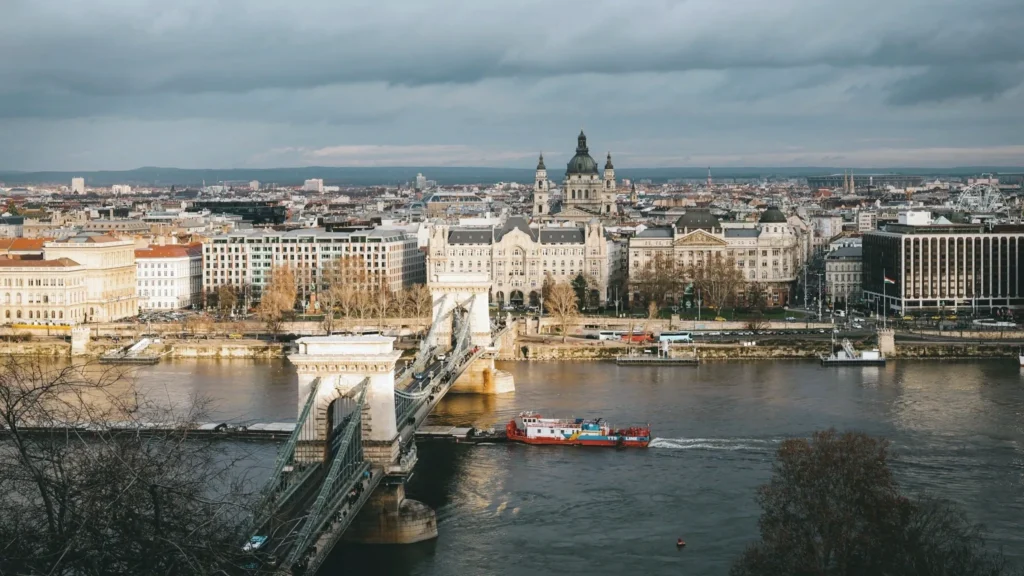
The central Pest riverfront and the adjoining parts of Belváros–Lipótváros represent one of Budapest’s most internationally legible residential settings.
The Danube, the Parliament, the historic bridges and the Buda skyline create a visual identity that buyers can understand immediately, even if they have limited previous knowledge of the city. Parts of the riverbanks and the historic centre form part of Budapest’s UNESCO World Heritage property, reinforcing the architectural and cultural significance of the setting.
Demand in this market is not driven by the district name alone. The strongest differentiation usually occurs according to:
- direct or oblique river views;
- floor level;
- building and facade quality;
- distance from heavy traffic;
- orientation and daylight;
- lift access;
- condition of the common areas;
- the relationship between representative rooms and the view.
A nominally riverside apartment may have limited sightlines, significant road noise or compromised natural light. By contrast, a residence one street behind the embankment may offer greater privacy and a calmer daily environment while retaining immediate access to the riverfront.
The rarest properties are those that successfully combine panorama, architectural quality, appropriate floor level and acoustic comfort.
The Historic Pest Core and the Andrássy Axis
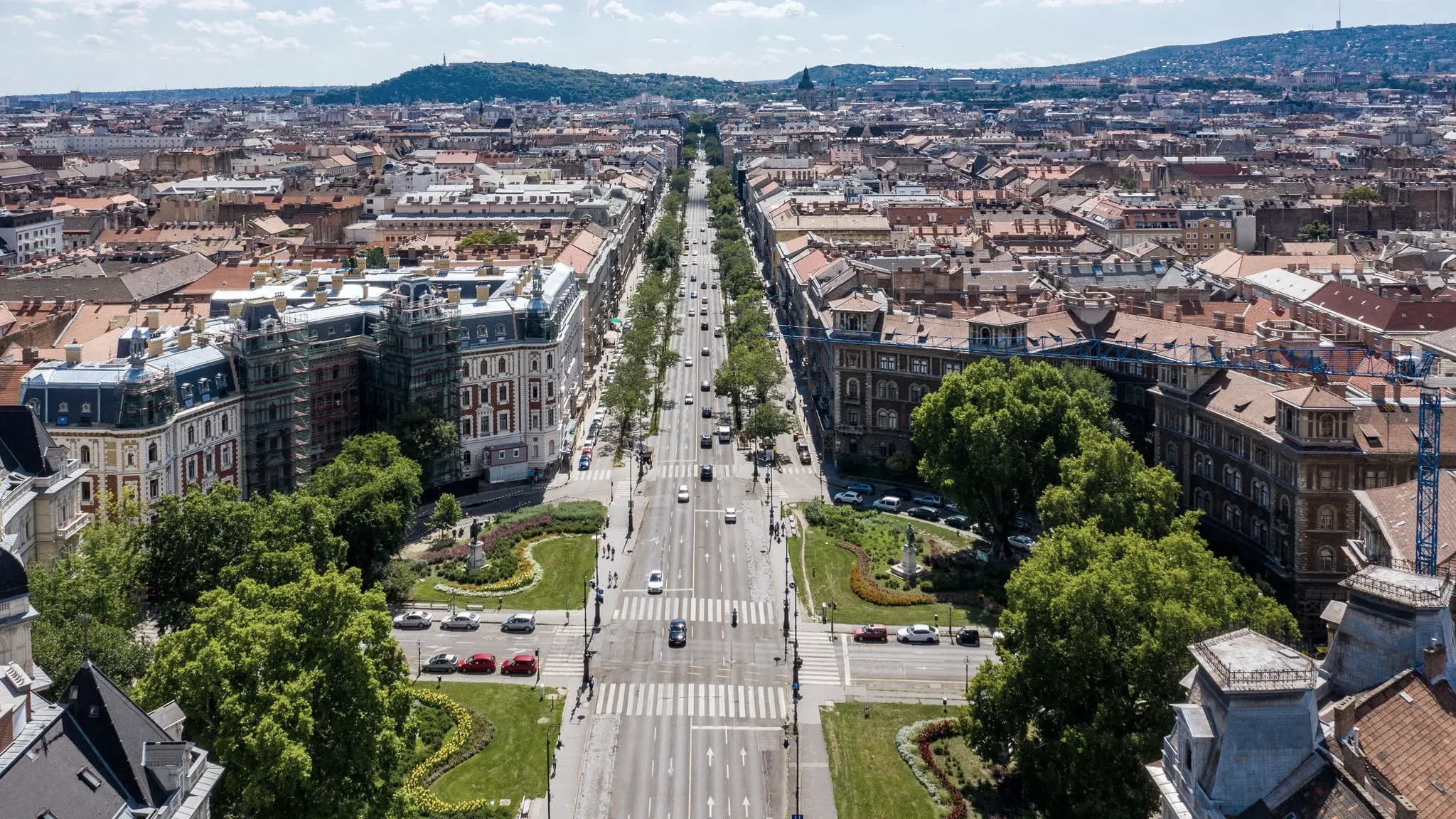
The historic districts of central Pest contain some of Budapest’s richest nineteenth- and early twentieth-century residential architecture.
The areas surrounding the Opera, Andrássy Avenue, the diplomatic quarter and selected streets between the city centre and Városliget can offer high ceilings, substantial room proportions, formal facades and strong cultural connectivity. Andrássy Avenue and the Millennium Underground are included within Budapest’s World Heritage designation.
This market attracts buyers who value:
- historic architecture;
- walkability;
- access to restaurants, theatres and cultural institutions;
- proximity to offices and international services;
- a recognisable central Budapest atmosphere.
However, the central Pest market is particularly sensitive to building-level differences.
Two neighbouring buildings may vary considerably in maintenance, courtyard proportions, short-term visitor activity, lift quality and condominium management. Street exposure also matters: a prestigious boulevard may provide architectural presence but greater traffic, while a quieter side street may offer better residential usability.
For this reason, sustained demand tends to concentrate in buildings where the original architecture is supported by proper maintenance and where the apartment itself has an effective relationship with light, privacy and circulation.
Historic Buda and the Castle Environment
The Castle District and the established residential areas below and around Castle Hill offer a different form of scarcity.
Here, the attraction lies not only in individual buildings but in the continuity of the surrounding urban landscape. Topography, protected views, historic streets and the relationship with the Danube create an environment that cannot be reproduced through conventional new development.
The available residential stock is comparatively diverse. It includes historic apartments, smaller buildings, post-war properties and carefully integrated contemporary homes. As a result, the quality of the immediate setting and the individual building remains decisive.
Properties with lasting appeal often combine:
- a quiet historic street;
- views toward Pest, the Danube or the surrounding hills;
- manageable access and parking;
- good natural light despite the dense historic fabric;
- an appropriate level of technical modernisation;
- preserved architectural character.
Scarcity in this area is partly physical and partly regulatory. The established urban structure and heritage context limit the extent to which comparable residential supply can be created.
The Buda Hills: Space, Privacy and Low Density
Selected neighbourhoods in Districts II and XII form another core Budapest prime residential market.
Their appeal is based less on urban monumentality and more on landscape, privacy, greenery and lower development density. The relevant property types include villas, detached homes, smaller condominiums and high-quality apartments with gardens, terraces or panoramas.
Demand is strongest where a hillside property offers not only an attractive view but also practical access.
A remote or steeply situated home may provide exceptional privacy while creating daily dependence on a car. A more accessible address may have slightly less dramatic elevation but perform better as a permanent residence because schools, services and public transport are easier to reach.
The limited availability of well-positioned plots contributes to scarcity, but not every hillside property is equally protected from future development. Buyers should consider whether a panorama depends on neighbouring land that could later be built upon.
In this market, durable value generally reflects the balance between:
- view and orientation;
- privacy and accessibility;
- garden quality and maintenance requirements;
- building condition and energy performance;
- parking and approach;
- long-term protection of the surrounding environment.
Falk Miksa Street, Újlipótváros and Selected Urban Neighbourhoods
Not all durable prime demand is concentrated in the most formal monumental areas.
Falk Miksa Street and selected parts of Újlipótváros demonstrate how architectural coherence, neighbourhood identity and everyday usability can support a strong residential micro-market.
These locations offer a different proposition from the Danube-facing centre or the Buda Hills. Their appeal may derive from:
- distinctive period buildings;
- cafes, galleries and local services;
- access to the river and central transport;
- established residential communities;
- practical walking distances;
- apartments with balanced proportions and strong daylight.
Such neighbourhoods can attract both domestic and international buyers because they feel recognisably urban while remaining suitable for ordinary daily life.
The scarcity is often building-specific. A well-maintained upper-floor apartment with a lift, attractive street exposure and technically sound renovation may have relatively few direct substitutes, even if a large number of apartments are nominally offered within the surrounding district.
Price Growth Does Not Identify Prime Quality on Its Own
Budapest experienced exceptionally strong residential price growth during 2025.
The Hungarian Central Statistical Office reported that average square-metre prices in Budapest were 21% higher year on year in the fourth quarter of 2025. Growth varied by broad sub-market: prices increased by 17% in inner Pest and 16% in the Buda hillside districts, while several lower-priced parts of Budapest recorded stronger percentage increases.
This distinction is important.
A higher rate of appreciation does not necessarily mean that a location has become more prime. Lower-priced districts may record faster percentage growth during periods of affordability-driven demand, credit expansion or market convergence. Mature prime areas may show more moderate headline growth because their starting price level is already high.
The current data therefore describe the wider market cycle, but they do not replace property-level analysis. Within a prime neighbourhood, the difference between an exceptional property and an average one may be greater than the difference between district-wide price indices.
For a broader review of the latest pricing, supply and demand indicators, see Budapest Prime Residential Market: What 2026 Data Suggests.
Demand Has Become More Segmented
The Budapest housing market entered 2026 with a different buyer composition from the previous year.
Following the introduction of the Home Start Programme, first-time buyers accounted for approximately 40% of Budapest purchases in the first quarter of 2026, up from 25% one year earlier. At the same time, investment-motivated buyers became more cautious, partly in response to lower rental yields and rising indications of market overvaluation.
The programme has had less influence in Budapest’s more expensive districts because of its price limitations. The MNB found that its market penetration was generally highest in lower-priced Budapest districts and declined as average square-metre prices increased.
This creates a more segmented market.
The broad Budapest market may be strongly affected by subsidised credit and first-time-buyer affordability, while prime transactions remain more dependent on purchaser equity, property quality and individual decision-making.
In the prime segment, buyers are therefore less likely to treat all available stock as interchangeable. A transaction may depend on the appearance of a very specific property rather than on general market availability.
International Demand Is Selective
International buyers do not form a single homogeneous group.
Some seek a central second home that can be used without a car. Others prioritise a family residence, proximity to international schools, a river view, architectural character or a low-maintenance investment property.
For a structured comparison of property types, locations and ownership objectives, see What to Buy in Budapest: Matching Property Type, Location and Buyer Objectives.
The locations most likely to remain intelligible to international demand are those with a clear proposition:
- an internationally recognised view or landmark setting;
- a historic urban environment;
- strong transport and walkability;
- established residential prestige;
- greenery and privacy;
- architecture that is difficult to replicate.
Yet international familiarity should not be confused with guaranteed liquidity. A property may be visually impressive but difficult to resell if it has an inefficient plan, weak building management, excessive operating costs or a highly personalised renovation.
The broadest demand tends to attach to properties that combine distinctiveness with practical usability.
Architectural Quality Supports Scarcity
Architecture is one of the central links between demand and scarcity.
Budapest has a substantial stock of period residential buildings, but only a limited proportion combine:
- preserved architectural detail;
- coherent room proportions;
- sufficient natural light;
- a suitable floor level;
- effective modern building services;
- maintained common areas;
- a technically credible renovation.
For a more detailed assessment of natural light, spatial proportions, building condition, privacy and everyday usability, see What Defines a High-Quality Budapest Apartment?
An apartment that retains historic doors and parquet flooring but has obsolete wiring, inadequate heating or poor waterproofing is not equivalent to a fully coordinated restoration. Equally, a visually luxurious refurbishment may reduce long-term appeal if it removes the architectural qualities that originally distinguished the property.
For a closer distinction between surface presentation, technical renovation quality and defensible long-term value, see Renovated or Unrenovated: How to Assess the Real Value of a Budapest Property.
The market increasingly differentiates between surface presentation and genuine building quality. In a maturing prime segment, this distinction can influence both saleability and the resilience of value.
Scarcity Must Be Tested, Not Assumed
Sellers frequently describe a property as rare. The market does not always agree.
True scarcity should be tested through several questions:
- How many genuinely comparable properties exist?
- Can the view or privacy be reproduced elsewhere?
- Is the building itself distinctive and well managed?
- Does the property serve a broad enough group of future buyers?
- Are its limitations permanent or correctable?
- Is the asking price supported by completed transactions or only by competing listings?
- Would a buyer accept another property nearby as a realistic substitute?
A property may be unique in appearance but not necessarily scarce in economic terms. If its layout, access or condition substantially narrows the buyer pool, uniqueness can reduce liquidity rather than create pricing power.
The strongest scarcity occurs when a property is difficult to replace and simultaneously attractive to several credible categories of purchaser.
For the corresponding seller-side framework covering market positioning, pricing, presentation and negotiation, see Selling Property in Hungary: Key Steps for International Owners.
Where Demand and Scarcity Intersect
Budapest’s most durable prime residential markets are not defined by a fixed hierarchy of district numbers.
They emerge where several forms of value coincide:
- a location with established recognition;
- a building or setting with architectural integrity;
- limited opportunities for comparable new supply;
- practical long-term usability;
- a sufficiently broad domestic and international buyer base;
- qualities that cannot be created through renovation alone.
The Danube embankments, selected parts of central Pest, the Castle environment, the Buda Hills and several established urban neighbourhoods all contain properties that meet these conditions. They also contain properties that do not.
For buyers and sellers, the critical task is therefore to distinguish general district prestige from genuine property-level scarcity.
In Budapest’s prime residential market, the most resilient demand tends to follow irreplaceable quality rather than postcode alone.
Sources and Further Reading
Magyar Nemzeti Bank
Housing Market Report, May 2026.
Hungarian Central Statistical Office
Housing Prices, Housing Price Index, Q4 2025.
UNESCO World Heritage Centre
Budapest, including the Banks of the Danube, the Buda Castle Quarter and Andrássy Avenue.
Municipality of Budapest
Budapest Cityscape Design Manual.
This article provides general market information and editorial analysis. Market conditions vary by location, property type and transaction, and individual properties should be assessed on their own legal, technical and commercial merits.
Related Insights