A second home in Budapest is not assessed in exactly the same way as a principal residence or a conventional investment property.
The owner may use it intensively for several weeks, leave it unoccupied for extended periods, share it with family members or return at short notice for business, cultural events and longer seasonal stays.
Budapest can support these different patterns of use. Its international connections, extensive urban services, historic architecture and year-round cultural life make it more than a summer or weekend destination. At the same time, the success of a second home depends on practical matters: location, ease of arrival, maintenance, security, building management and the ability to operate the property reliably from abroad.
Choosing a Second Home in Budapest According to Use
The first question is not simply where to buy, but how the property will function.
A second home may serve as:
- a regular city base;
- a residence for cultural and social visits;
- a place for extended seasonal stays;
- accommodation for family members;
- a European base for an internationally mobile owner;
- a future principal residence;
- a property occasionally offered for longer-term rental.
These uses create different priorities.
An owner visiting for short stays may value immediate access to the airport, restaurants, cultural institutions and everyday services. Someone spending several months in Budapest may place greater emphasis on storage, work space, outdoor areas, parking and neighbourhood life.
The property should therefore be assessed as part of a recurring pattern of arrival, occupation, departure and remote management.
For a broader framework for matching property type, location and ownership objectives, see What to Buy in Budapest: Matching Property Type, Location and Buyer Objectives.
International Accessibility
Budapest Ferenc Liszt International Airport provides direct access to an extensive and expanding network of European and intercontinental destinations. Budapest Airport’s 2026 route-development information refers to 134 destinations served by 41 airlines, although individual routes and frequencies may vary by season.
For a second-home owner, the number of available destinations is only one part of accessibility.
It is also useful to consider:
- the frequency of flights from the owner’s principal location;
- whether the service operates throughout the year or seasonally;
- convenient departure and arrival times;
- alternative connections through major European hubs;
- the reliability of onward transport from the airport;
- the ease of travelling with luggage, children or pets.
A destination served several times each week may function very differently from one with multiple daily connections. The practical value of a second home is closely related to how easily it can be reached when the owner actually wishes to use it.
From the Airport to the Property
The 100E Airport Express provides a direct connection between the airport and central Budapest through Kálvin tér to Deák Ferenc tér. BKK states that the service operates around the clock, seven days a week.
This makes selected central locations particularly convenient for owners who prefer not to maintain a car in Budapest.
A central apartment may allow the owner to move from the airport to the property and then complete most daily journeys on foot or by public transport. A Buda Hills residence may offer greater privacy and greenery but require a taxi, private transfer or car for more predictable access.
For a closer comparison of Budapest’s principal residential settings, see Choosing the Right Budapest District: Buda Hills, Historic Pest and Riverside Living.
The correct balance depends on intended use. Airport convenience may be decisive for frequent short visits, while a longer-stay owner may accept a more complex arrival in exchange for space, views or a garden.
Budapest Is More Than a Seasonal Destination
Some second-home markets are strongly dependent on a single season. Their properties may be highly attractive during summer or winter but comparatively inactive during the remainder of the year.
Budapest operates differently.
Its urban economy, cultural institutions, restaurants, universities, professional services and public transport function throughout the year. The official city events calendar includes cultural, sporting, gastronomic and community programmes across different seasons, rather than concentrating activity into a short visitor period.
This provides flexibility. An owner can use the property for:
- spring cultural programmes;
- summer city life and outdoor events;
- autumn exhibitions and performances;
- winter concerts, thermal baths and festive programmes;
- business and family visits throughout the year.
The property therefore does not need to justify itself through one narrow holiday period.
Culture as Part of Everyday Use
Budapest’s cultural offering is not limited to major visitor attractions.
The city supports museums, galleries, opera, classical music, theatre, contemporary performance, festivals and a broad range of smaller cultural venues. The official Budapest tourism portal describes the city as a cultural hub with museums, concerts, festivals, theatre and art programmes, while institutions such as the Hungarian State Opera and Müpa publish substantial seasonal programmes.
For a second-home owner, proximity to cultural activity can materially influence how often the property is used.
An apartment within walking or straightforward public-transport distance of the Opera, Andrássy Avenue, the Danube, the museum districts or major concert venues may encourage spontaneous visits and shorter stays. A more residential Buda location may require greater planning but offer a calmer environment between events.
The relevant question is not simply whether Budapest has a rich cultural life, but whether the selected property makes that life easy to access.
Architectural Identity and Sense of Place
A successful second home should feel connected to its location.
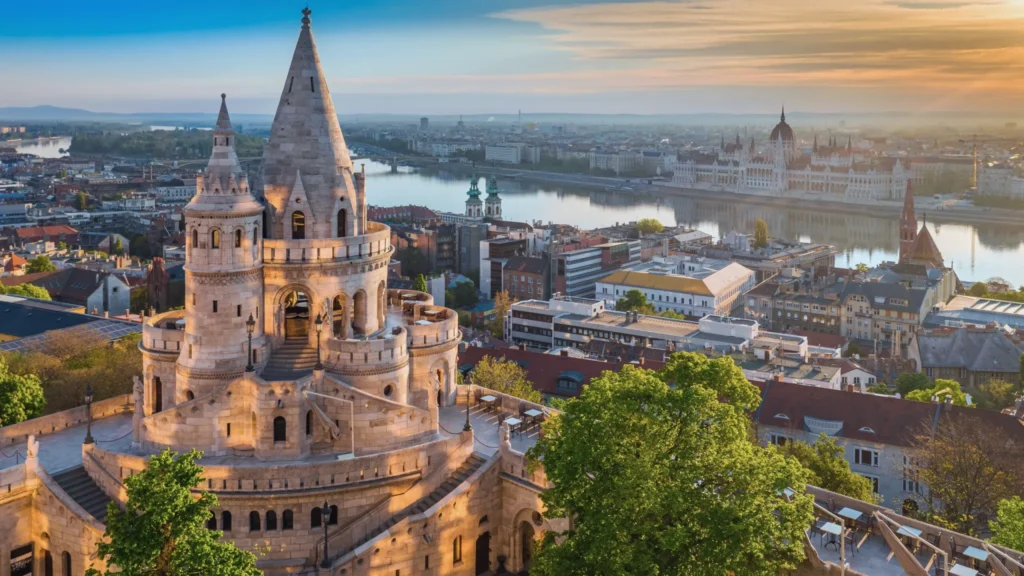
Budapest’s Danube riverbanks, the Buda Castle Quarter and Andrássy Avenue form part of a UNESCO World Heritage property recognised for its historic urban landscape and architectural development.
This architectural identity can be an important part of second-home appeal.
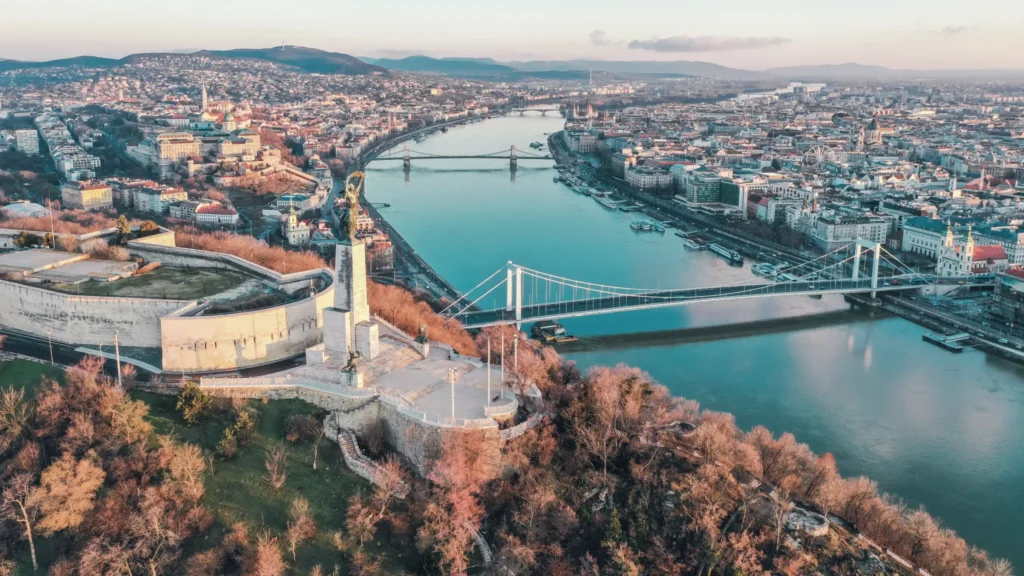
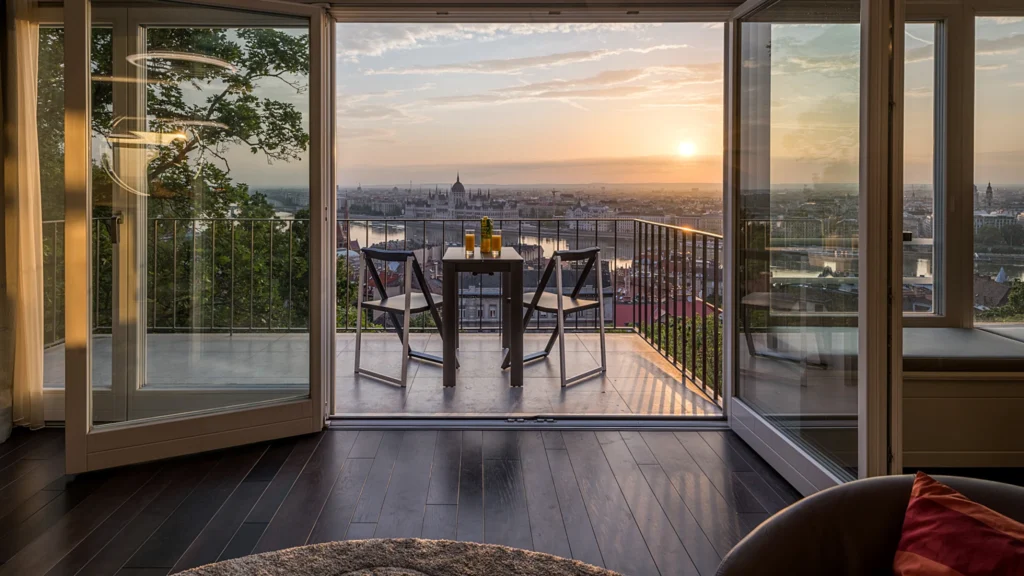
A period apartment with high ceilings and original details may provide a distinctly Budapest experience that cannot easily be reproduced elsewhere. A riverside residence may offer an immediate visual relationship with the city. A hillside property may provide greenery, privacy and a panoramic urban setting.
However, character should be balanced with practical performance. Historic architecture may involve older lifts, less efficient windows, higher ceilings, complex common areas and greater maintenance requirements.
The strongest choice combines a clear sense of place with a level of comfort appropriate to repeated and sometimes unplanned use.
For a more detailed framework for assessing natural light, layout, building condition and renovation quality, see What Defines a High-Quality Budapest Apartment?
Four Distinct Seasons
Budapest has a continental climate with meaningful seasonal variation. Official Hungarian meteorological records provide long-term Budapest data for temperature, precipitation and solar radiation, reflecting conditions that range from hot summer periods to cold winter weather.
This seasonal variation contributes to the city’s year-round character, but it also affects property selection.
Summer considerations include:
- solar exposure;
- external shading;
- air conditioning;
- ventilation;
- terrace usability;
- overheating on upper and top floors.
Winter considerations include:
- heating performance;
- window condition;
- insulation;
- the reliability of shared building systems;
- protection against freezing;
- the cost of maintaining a safe minimum temperature while vacant.
A property that appears comfortable during a mild viewing may perform very differently during the most demanding weeks of summer or winter.
Thermal Baths and Year-Round Wellbeing
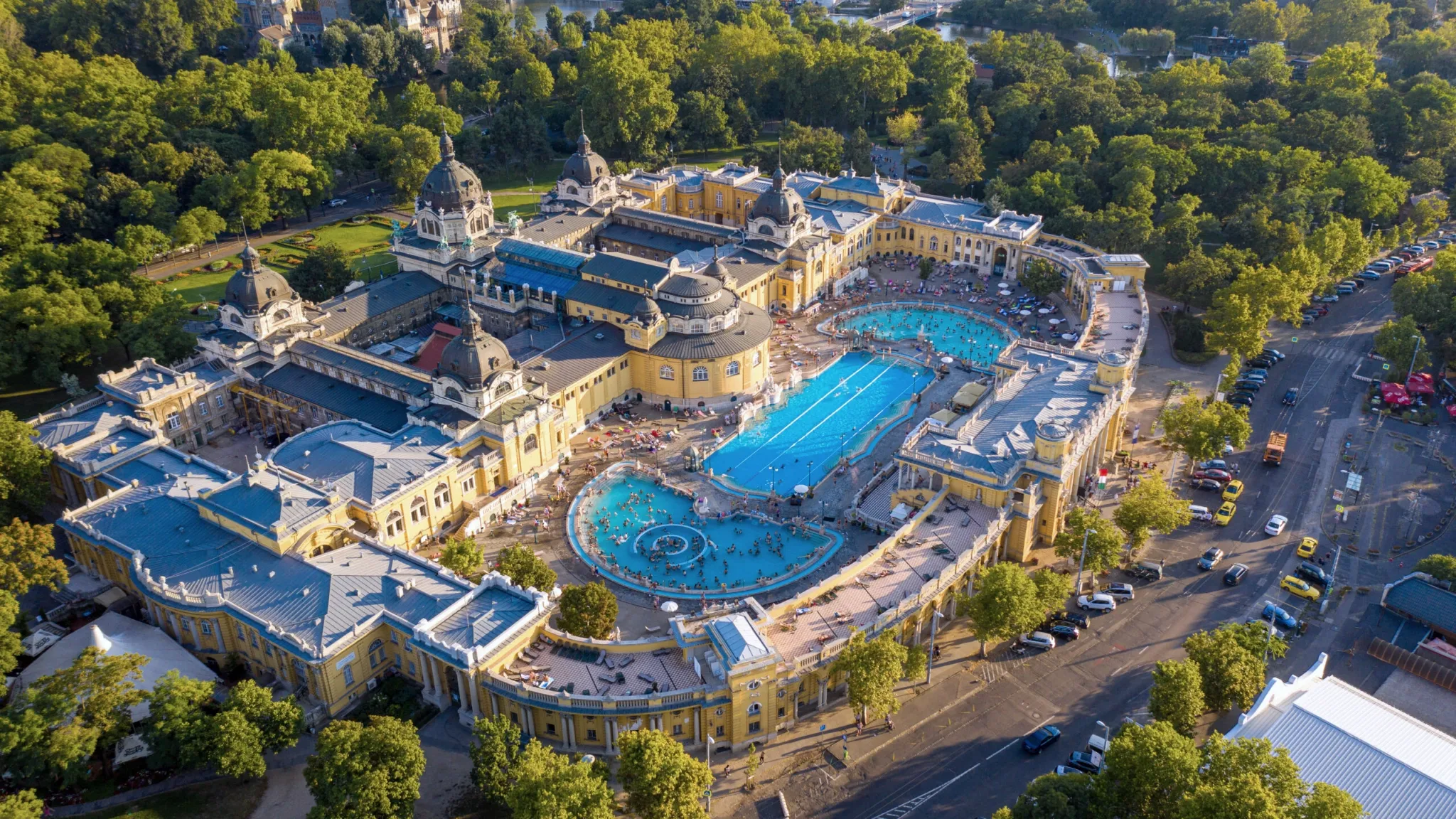
Budapest’s thermal-bath culture strengthens its appeal outside the conventional outdoor season.
The city’s official bath operator manages a network that includes the Széchenyi, Rudas, Lukács, Gellért and several other historic and modern bathing facilities.
For some owners, this becomes part of ordinary city life rather than an occasional tourist activity. The same applies to restaurants, markets, riverside walks, parks and neighbourhood cafes.
A useful second-home location does not need to place every major attraction at the front door. It should, however, provide easy access to the activities the owner is likely to use repeatedly.
Selecting the Right Residential Setting
Budapest offers several distinct second-home environments.
Historic Central Pest
Central Pest can provide:
- walkability;
- cultural proximity;
- restaurants and services;
- strong public transport;
- direct airport-bus access from central hubs;
- characteristic period architecture.
It may suit owners making frequent short visits or wishing to use the city without a car.
The trade-offs may include traffic, nightlife, tourism, busy common areas and significant differences between neighbouring buildings.
Riverside Locations
A Danube-facing or near-river property can provide:
- open views;
- a strong sense of place;
- natural light;
- proximity to central Budapest;
- immediate access to riverfront walks and landmarks.
The buyer should assess road and tram noise, orientation, glazing, summer heat and whether the view is available from the principal rooms.
Buda and the Castle Environment
Historic Buda can offer:
- quieter streets;
- architectural character;
- proximity to the Castle and Danube;
- views toward Pest;
- a more residential atmosphere.
Access, parking, gradients and the final connection from public transport require careful evaluation.
The Buda Hills
The Buda Hills may provide:
- privacy;
- greenery;
- terraces and gardens;
- panoramic views;
- larger homes;
- a calmer environment for extended stays.
These advantages usually come with greater dependence on a car, taxi or local support. A hillside house may also require more maintenance than a centrally managed apartment.
The Importance of “Lock-and-Leave” Practicality
A second home should remain manageable when the owner is absent.
The ideal property can be secured, monitored and left for a period without creating disproportionate risk or maintenance.
Relevant considerations include:
- the reliability of entrance doors and locks;
- building access control;
- alarm and monitoring systems;
- water-isolation points;
- heating and cooling controls;
- protection against leaks;
- secure window and terrace closures;
- the condition of appliances;
- arrangements for post and deliveries;
- emergency access for an authorised local representative.
An apartment in a professionally managed condominium may offer greater lock-and-leave convenience than a detached house. A house provides privacy and space but normally requires regular checks of the garden, roof, drainage, heating and external areas.
The owner should assess the property not only when occupied, but also as a building that may remain unattended.
Building Management Matters
For a second-home apartment, the quality of the condominium can be as important as the interior.
The owner may depend on the building manager or common representative for information about:
- planned repairs;
- utility interruptions;
- lift maintenance;
- facade and roof works;
- access arrangements;
- common-cost payments;
- emergency incidents;
- owners’ meetings.
A well-managed building creates continuity while the owner is abroad. Poor communication can turn relatively minor matters into complex practical problems.
Before purchase, it is useful to understand how notices are issued, whether communication is available in a language the owner understands and whether payments can be made reliably from a foreign bank account.
Heating, Cooling and Utilities During Absence
A second home should not simply be switched off and forgotten.
The appropriate approach depends on the building, season and technical systems. During winter, maintaining a safe internal temperature may be necessary to protect pipes, finishes and neighbouring properties. During summer, ventilation and heat control may be required to reduce overheating and humidity.
The owner should understand:
- which utilities remain active;
- which costs are fixed and which depend on consumption;
- whether meters can be read remotely;
- how heating is controlled;
- whether the building uses central, district or individual systems;
- how water can be isolated;
- who can respond to an alarm, leak or equipment failure.
Complex smart-home systems can assist remote operation, but only when they are reliable, maintainable and supported locally. A simpler system that a local representative can operate may be more valuable than highly specialised technology.
Maintenance and Local Representation
Even a low-maintenance apartment requires periodic attention.
A local representative may be needed to:
- inspect the property;
- ventilate rooms;
- check heating and water;
- coordinate cleaning;
- receive contractors;
- manage keys;
- supervise repairs;
- prepare the home before arrival;
- respond to building notices;
- document the property’s condition.
The required level of service depends on the property.
A recently renovated central apartment may need occasional inspection and cleaning. A large terrace, garden, swimming pool or complex mechanical system creates a more intensive management requirement.
The cost of local support should therefore be considered as part of ownership, not as an unexpected service required only when something goes wrong.
To distinguish cosmetic refurbishment from durable technical and architectural quality, see Renovated or Unrenovated: How to Assess the Real Value of a Budapest Property.
Furnishing for Repeated Use
A second home should be comfortable without becoming unnecessarily difficult to maintain.
Furniture and storage should support:
- personal belongings remaining in Budapest;
- clothing for different seasons;
- guest use;
- work and longer stays;
- secure storage during rental or maintenance access;
- easy cleaning and replacement.
Highly delicate finishes or unusual bespoke systems may be appropriate for a permanently occupied residence but less practical where the owner is absent.
The most successful interiors often combine architectural quality with durable materials, clear storage and equipment that can be serviced locally.
Security and Privacy
Second homes can face particular security risks because patterns of absence may become predictable.
Security should be assessed at several levels:
- neighbourhood;
- building entrance;
- staircase and common areas;
- apartment entrance;
- windows and terraces;
- alarm and monitoring systems;
- key management;
- information shared with contractors or temporary users.
Discretion can be as important as technology.
Keys should not circulate unnecessarily, and access should be documented. Where a property manager or adviser holds keys, authority and procedures should be clearly defined.
For high-value properties, security planning should be proportionate to the building and the owner’s usage pattern rather than based on generic equipment alone.
Personal Use and Rental Should Be Distinguished
Some owners intend to use the property exclusively themselves. Others may consider renting it during periods of absence.
These are different operating models.
Personal use prioritises availability, private storage and the ability to arrive without advance planning. Rental introduces additional questions concerning furnishing, management, taxation, insurance, condominium rules and the current regulatory framework.
The owner should decide whether rental is a genuine objective before selecting the property. A home designed around personal possessions and spontaneous use may not adapt conveniently to frequent guests.
Any proposed letting arrangement should be reviewed against the rules applicable at the time, including the property’s condominium regulations and local requirements.
Ownership Costs Should Be Evaluated Annually
The affordability of a second home should be assessed through its total annual ownership cost, not only the purchase price.
Relevant expenditure may include:
- condominium common costs;
- heating and utilities;
- insurance;
- property management;
- cleaning;
- alarm and monitoring;
- garden or terrace maintenance;
- periodic technical inspections;
- repairs and reserve expenditure;
- banking and administrative costs;
- local taxes or other obligations where applicable.
Some costs continue even when the property is unused.
A large home with low acquisition cost may be more expensive and demanding to maintain than a higher-priced apartment in a well-managed building.
For an overview of the wider legal, practical and transactional framework applying to an acquisition, see Buying Property in Hungary: Key Steps for International Buyers.
Accessibility Within the City
Second-home usability depends on ordinary daily journeys as much as on airport access.
The owner should consider:
- walking distance to food and services;
- public transport;
- taxi availability;
- parking;
- access to medical care;
- cultural venues;
- parks and outdoor spaces;
- the practicality of winter and evening travel.
A property that requires planning for every small task may be attractive for long stays but inconvenient for a three-day visit.
For owners who do not speak Hungarian or know the city well, a connected neighbourhood can reduce dependence on local assistance and make the property easier to enjoy from the first day of each stay.
Future Adaptability
A second home may eventually serve a different purpose from the one originally intended.
The owner may spend more time in Budapest, allow family members to use it, retain it into later life or convert it into a principal residence.
Long-term adaptability may depend on:
- lift access;
- stairs and thresholds;
- bedroom and bathroom arrangement;
- storage;
- home-office potential;
- parking;
- proximity to healthcare and services;
- ease of maintenance;
- suitability for year-round occupation.
A property selected only for occasional short visits may be less comfortable if stays become longer. It is therefore useful to distinguish temporary convenience from qualities that support sustained residential use.
Resale and Broader Market Appeal
A highly personalised second home may be ideal for one owner but difficult to transfer to another.
Long-term marketability is generally supported by:
- recognised location;
- good natural light;
- balanced layout;
- reliable lift access;
- appropriate outdoor space;
- manageable operating costs;
- sound building condition;
- practical airport and city connections;
- architecture with broad rather than narrowly individual appeal.
A property does not need to be generic. Distinctiveness is often an advantage. It should, however, remain usable by more than one highly specific owner profile.
For a closer analysis of scarcity, durable demand and Budapest’s prime micro-markets, see Budapest’s Prime Residential Districts: Where Demand and Scarcity Intersect.
A City That Rewards Repeated Use
Budapest works as a second-home destination because it offers more than a sequence of attractions.
Its architecture, neighbourhoods, cultural institutions, thermal baths, restaurants, public spaces and seasonal changes create reasons to return throughout the year. The city is sufficiently compact for many daily activities to remain accessible, while its residential environments range from dense historic streets to green hillside settings.
The appropriate property is the one that makes repeated use straightforward.
International access, location, building management, seasonal comfort and local support should be evaluated together. A beautiful apartment that is difficult to reach or manage may be used less often than expected. A well-positioned and efficiently operated home can become a genuine part of the owner’s life in Budapest.
A successful second home is therefore not simply a property in an attractive city. It is a residence that remains accessible, secure, comfortable and ready to use whenever the owner returns.
Sources and Further Reading
Budapest Airport
Destinations and Route Development.
Budapest Transport Centre – BKK
Airport Express and Travel Information.
Budapest Brand / Budapestinfo
Culture, Events and Programmes in Budapest.
UNESCO World Heritage Centre
Budapest, including the Banks of the Danube, the Buda Castle Quarter and Andrássy Avenue.
Hungarian Meteorological Service
Budapest Climate Data Series.
Budapest Spas and Baths
Budapest Spas and Thermal Baths.
This article provides general property and lifestyle information. The suitability, operating requirements and ownership costs of an individual property should be assessed in relation to the owner’s intended use and circumstances.
Related Insights